

Introduction
The rise of digital financial services has transformed how people handle foreign currency. Travellers, students, professionals, and families increasingly prefer online foreign exchange platforms instead of visiting physical counters.The convenience is obvious: live rate visibility, digital documentation, and doorstep delivery options. However, convenience always raises an important question — is online money exchange safe in India?
Safety concerns are natural whenever money moves through digital systems. People worry about fraud, hidden fees, counterfeit currency, and misuse of personal documents. These concerns are amplified in foreign currency exchange because the process involves compliance rules, identity verification, and cross-border financial flows. Many users hesitate simply because they do not fully understand what is forex and how regulated online currency systems operate.
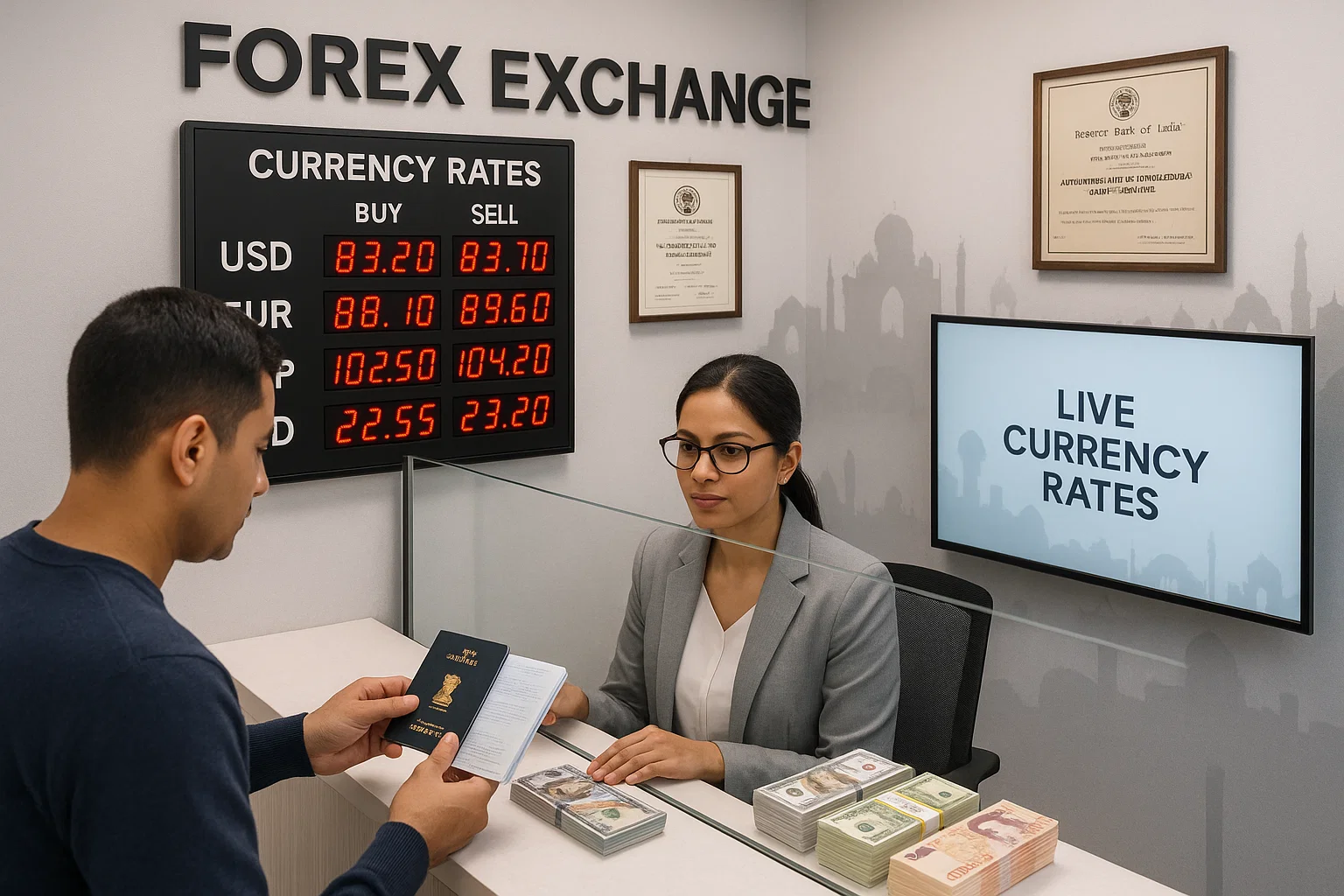
The reality is that online money exchange in India is built on a strong regulatory framework governed by the Reserve Bank of India (RBI) and the Foreign Exchange Management Act (FEMA). Authorised platforms operate under strict compliance standards designed to protect both customers and the financial system. When users choose legitimate providers, online forex is not only safe — it is often safer and more transparent than informal offline exchanges.
To understand the legal framework behind currency regulation, read Foreign Exchange Management in India.
Videshi Mudra, which is a brand of Princess Forex Pvt Ltd, operates within this regulated ecosystem and reflects how structured online money exchange systems prioritise compliance, transparency, and user protection. Understanding how safety works in digital currency exchange helps users move from fear-based hesitation to informed confidence.
Why People Question the Safety of Online Money Exchange
Foreign currency exchange historically happened at bank counters or local money changers. Digital forex is relatively new for many users, which naturally creates skepticism. When people hear “online money exchange,” they often imagine unsecured transactions or unverified platforms operating without oversight.
Another reason for hesitation is lack of awareness about licensing. Many users do not realise that authorised online forex platforms must follow the same legal structure as physical exchange counters. The difference is the delivery channel — not the regulatory obligation. Every legitimate online currency exchange provider in India is accountable to RBI guidelines, transaction reporting requirements, and compliance audits.
Fear is also shaped by stories of informal dealers operating outside regulation. These actors sometimes advertise unrealistic rates or promise instant service without documentation. While such offers may look attractive, they represent the real risk in currency exchange — not regulated online platforms.
When users understand that safety depends on choosing authorised providers rather than avoiding digital systems altogether, their perception shifts. Online money exchange becomes less about risk and more about structured financial planning.
How RBI Regulation Makes Online Forex Safe
The strongest safety layer in India’s online money exchange ecosystem is regulation. RBI does not treat digital forex casually. Authorised dealers and licensed money changers must comply with strict operational norms that protect consumers.
These safeguards include:
- Mandatory Know Your Customer (KYC) verification
- Transaction purpose declaration
- Rate transparency requirements
- Digital record maintenance
- Audit trails for every exchange
- Anti-money laundering monitoring
These rules ensure that every online forex transaction is documented and traceable. Users benefit from built-in legal protection. If disputes occur, authorised providers are accountable under financial law.
This regulatory environment makes online money exchange safer than many people assume. In fact, informal offline exchanges pose greater danger because they bypass these safeguards entirely. Without receipts, verification, or reporting, customers have no legal recourse if something goes wrong.
Videshi Mudra, which is a brand of Princess Forex Pvt Ltd, aligns its processes with RBI frameworks, ensuring that online transactions remain compliant from start to finish. Safety is not an optional feature — it is a structural requirement.
Digital Documentation Is Safer Than Paper-Based Exchange
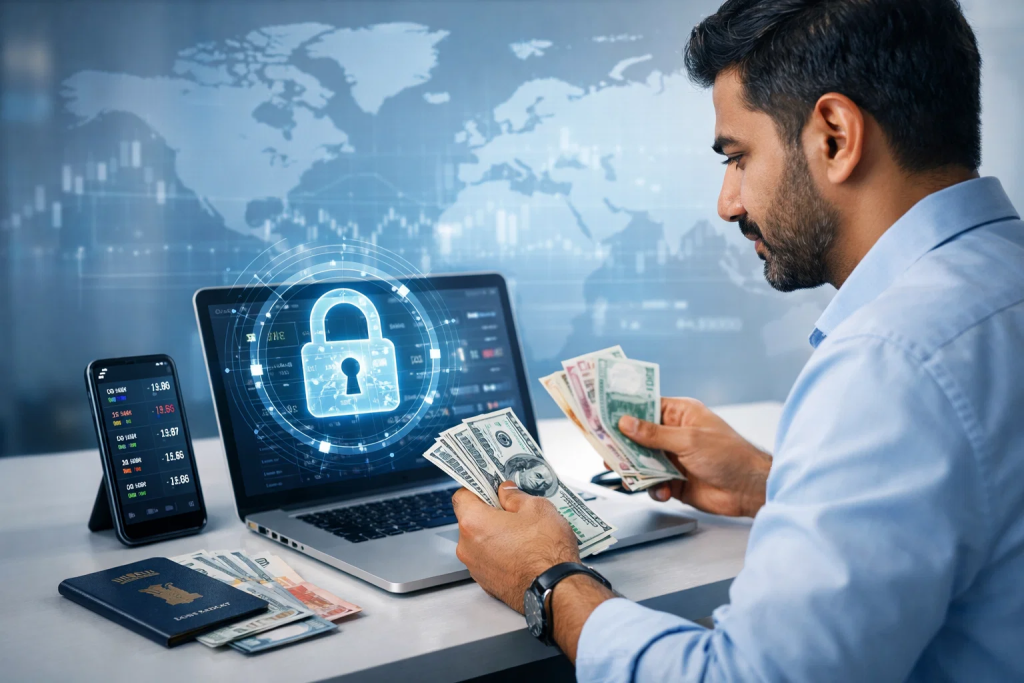
One surprising advantage of online money exchange is digital documentation security. Many users assume uploading documents online is risky, but regulated platforms implement encrypted storage and secure verification systems.
Offline exchange often involves handing over photocopies of passports and PAN cards to local counters. These paper documents can be misplaced, mishandled, or copied without oversight. Digital platforms, by contrast, operate through structured data systems with controlled access.
Modern online forex providers use:
- Encrypted file transfer
- Secure identity verification
- Restricted employee access
- Compliance-driven document storage
- Data protection protocols
This reduces the chance of misuse compared to casual paper handling. Users interacting with authorised platforms are engaging with financial-grade infrastructure — not informal document exchange.
Understanding this shift helps people see that digital forex is not inherently unsafe. The real safety factor lies in choosing regulated systems over informal alternatives.
The Role of Transparency in Online Money Exchange Safety
Safety is not only about fraud prevention; it is also about clarity. Many forex risks arise when customers do not understand pricing. Hidden margins, unclear spreads, and last-minute fees create distrust.
Online money exchange platforms improve safety by increasing transparency. Users can view live exchange rates, compare pricing, and understand conversion values before committing. This removes pressure from in-person negotiations and reduces impulsive decisions.
Transparency allows customers to evaluate:
- Real-time exchange rates
- Rate spreads
- Final receivable amounts
- Documentation requirements
- Delivery timelines
When information is visible upfront, manipulation becomes difficult. This environment builds trust through predictability.
Videshi Mudra, which is a brand of Princess Forex Pvt Ltd, reflects this transparency-driven model by presenting structured rate information and compliance clarity. Users are not forced into rushed decisions; they are supported with visibility.
Common Myths About Online Money Exchange Safety
A large part of fear around online money exchange comes from myths rather than real risk. These misconceptions spread easily because foreign currency feels complex and unfamiliar to many users.
One common myth is that online forex platforms are unregulated startups operating without oversight. In reality, authorised online providers are extensions of licensed money changers or forex companies already approved by RBI. They cannot operate legally without compliance registration.
Another myth is that digital exchange increases the chance of counterfeit currency. This is backward. Counterfeit risk is higher in informal street exchanges where there is no verification system. Authorised platforms source currency through regulated banking channels, reducing exposure to fake notes.
Some people believe online transactions hide hidden fees more easily than offline counters. The opposite is usually true. Digital platforms display rates and conversion values before confirmation, while physical counters may disclose pricing verbally, leaving room for misunderstanding.
Fear often arises from unfamiliarity. When users compare myths with actual regulatory structure, online money exchange appears less risky and more predictable.
How to Identify a Safe Online Money Exchange Platform
Safety depends less on the idea of digital exchange and more on platform selection. Users who choose authorised providers reduce risk dramatically. Identifying safe online money exchange services requires checking a few essential signals.
First, verify regulatory affiliation. A legitimate platform should clearly indicate that it operates under an RBI-authorised entity. Compliance information should not be hidden or vague.
Second, observe documentation requirements. Safe platforms insist on KYC verification. While some users see this as inconvenient, it is actually proof of legitimacy. Any service offering currency exchange without identity verification is operating outside the law.
Third, review rate transparency. Authorised platforms display structured pricing rather than unrealistic promotional numbers. If a rate appears far better than the market average, caution is justified.
Fourth, examine customer communication. Professional platforms maintain secure dashboards, confirmation records, and transaction receipts. Informal dealers rely on verbal promises.
Videshi Mudra, which is a brand of Princess Forex Pvt Ltd, operates within these safety markers by aligning online money exchange processes with RBI norms and compliance-driven workflows. This structured approach signals reliability rather than improvisation.
If you want a practical checklist for choosing safe providers, see How to Identify a Trusted Forex Exchange in Delhi.
Doorstep Delivery and Transaction Security
One concern users frequently raise is whether doorstep delivery of foreign currency is safe. The idea of receiving currency at home may feel unusual compared to traditional counters. However, regulated delivery systems follow strict verification protocols.
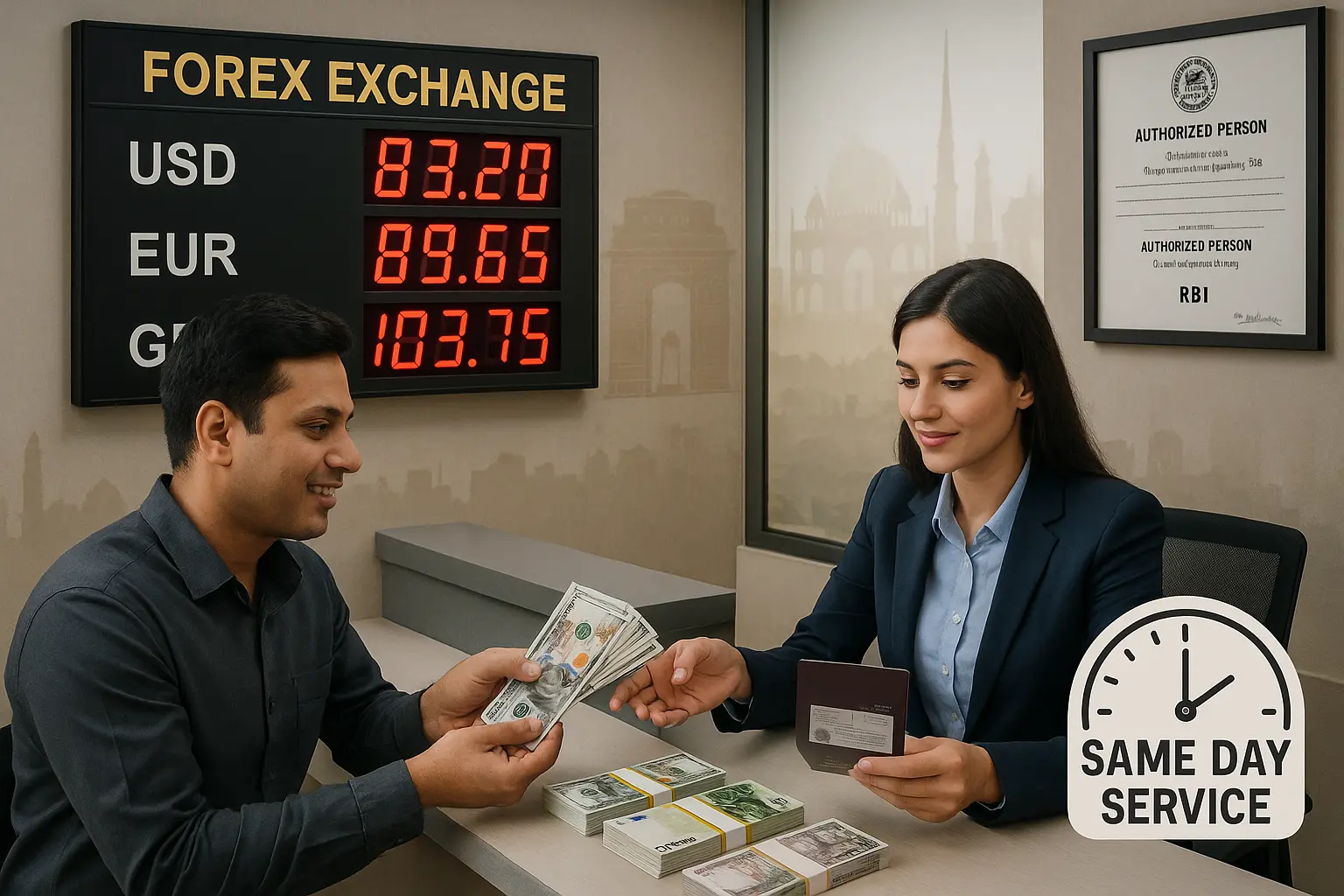
Authorised delivery services involve identity confirmation at the time of handover. The recipient must match the verified documentation submitted during the online order. Delivery agents operate under monitored logistics frameworks rather than informal courier systems.
Every delivered order is tied to:
- documented identity
- transaction record
- invoice trail
- compliance reporting
This traceability ensures that currency movement is accountable at every stage. Unlike informal exchanges where cash changes hands without documentation, authorised delivery creates a verifiable chain of custody.
Online money exchange platforms that offer delivery are extending regulated infrastructure — not bypassing it. The safety lies in the process, not the physical location of exchange.
Counterfeit Currency Protection in Online Forex
Counterfeit currency is one of the strongest fears associated with foreign exchange. However, counterfeit exposure is far more common in unregulated markets than in authorised channels.
Licensed forex providers source currency through verified banking networks. Notes are inspected, recorded, and tracked through institutional supply chains. These systems include automated detection and manual verification layers.
Customers exchanging through informal dealers often lack this protection. If counterfeit notes are discovered later, the buyer has no recourse because the transaction was undocumented.
Online money exchange platforms benefit from institutional sourcing. Digital order placement does not weaken currency authenticity — it strengthens traceability. Every note delivered is part of a documented financial system rather than a casual cash exchange.
Safety in forex is not about avoiding online channels. It is about avoiding unregulated channels.
Comparing Online Safety vs Informal Offline Exchange
Many people assume physical counters are automatically safer than digital systems. In reality, safety depends on regulation, not format. A licensed online platform is safer than an informal street dealer, even if the latter operates from a visible shop.
Informal exchanges introduce risks such as:
- counterfeit currency
- hidden fees
- lack of receipts
- identity misuse
- legal exposure
- no dispute resolution
Authorised online money exchange eliminates these vulnerabilities by embedding compliance into every step. Transactions are documented, rates are transparent, and customer identity is verified under law.
Safety is not defined by physical presence. It is defined by accountability.
Users who understand this distinction stop asking whether online forex is safe and begin asking whether the provider is authorised.
Why Fear Persists Despite Regulation
Human behaviour often lags behind technological reality. Even when systems are safe, unfamiliarity triggers hesitation. Foreign currency exchange carries emotional weight because it involves international travel, education, or financial planning.
People associate safety with habit. Since older generations used physical counters, digital exchange feels risky simply because it is newer. Yet many of the same people trust online banking, digital payments, and e-commerce platforms daily.
Online money exchange operates within the same financial infrastructure that supports digital banking. The fear is psychological, not structural.
Education gradually replaces hesitation. As users experience transparent digital exchange once, their perception shifts permanently. Confidence grows through familiarity.
Real-Life Scenarios Where Online Money Exchange Proves Safer
Understanding safety becomes easier when viewed through everyday scenarios. Many risks in currency exchange occur not because the system is unsafe, but because people act under urgency.
Consider a traveller leaving for an early morning flight who realises they need foreign currency at midnight. Airport counters become the default choice. These counters operate legally, but their pricing is driven by urgency. Customers pay higher spreads because they have no comparison time. Safety exists, but fairness decreases.
Now compare this with someone who plans exchange online two days in advance. They review live rates, upload documents calmly, and schedule delivery. The process is structured, documented, and transparent. The difference is not technology — it is behavioural timing.
Another scenario involves returning travellers with leftover currency. Many people keep unused foreign notes for years because they assume reconversion is complicated. Others sell casually to acquaintances at arbitrary rates. Both options create financial inefficiency and potential risk.
Online money exchange platforms normalise reconversion by offering lawful, traceable channels. Users who understand this treat currency as a financial asset, not a travel souvenir.
Airport Exchange vs Online Exchange Safety
Airport exchange counters are often misunderstood. They are authorised, legal, and regulated. The issue is not safety — it is pricing pressure. Airports operate in high-demand environments where convenience outweighs cost.
When travellers exchange currency at airports, they are paying for urgency. The safety level remains intact, but transparency decreases because users rarely compare rates in that moment. The psychological pressure of departure removes decision clarity.
Online money exchange shifts the decision away from urgency. Users plan ahead, evaluate options, and convert with awareness. The transaction becomes financial rather than emotional.
Safety is highest when urgency is lowest. Digital forex reduces urgency by allowing preparation. This behavioural advantage is often overlooked when discussing online safety.
How Forex Fraud Actually Happens
Most forex fraud does not occur through authorised online platforms. It happens in informal networks that promise shortcuts.
Common fraud patterns include:
- dealers offering unrealistic exchange rates
- cash transactions without receipts
- counterfeit currency circulation
- identity misuse through undocumented exchanges
- social media sellers posing as forex agents
These actors rely on speed and secrecy. They bypass compliance entirely. Customers attracted by convenience or better-looking rates often realise the risk only after the transaction ends.
Authorised online money exchange eliminates these loopholes. Every step is recorded. Fraud thrives in opacity, not in regulated digital systems.
Understanding how fraud works reframes the safety conversation. The danger is not online exchange. The danger is unverified exchange.
A Practical Safety Checklist for Users
Users do not need financial expertise to protect themselves. A simple behavioural checklist ensures safe online money exchange every time.
Always verify that the provider operates under an RBI-authorised entity. Legitimate platforms display compliance affiliation clearly.
Never exchange currency without documentation. KYC requirements protect customers as much as institutions.
Check live exchange rates before committing. Transparency is a safety feature, not just a pricing feature.
Avoid platforms promising unrealistic deals. Extreme rates signal informal operations.
Demand receipts and transaction confirmation. Documented exchange creates legal protection.
Plan currency needs in advance. Urgency reduces decision quality.
This checklist transforms online money exchange from a perceived risk into a controlled process.
Videshi Mudra, which is a brand of Princess Forex Pvt Ltd, aligns with these safety principles by embedding compliance, documentation, and transparent workflows into its platform. Users who follow structured channels operate within a protected financial ecosystem.
Behaviour Patterns of Safe Currency Users
People who regularly handle foreign currency develop predictable habits that prioritise safety without conscious effort.
They exchange through authorised providers by default. Informal options never become part of their decision tree.
They monitor rates casually rather than obsessively. Awareness replaces panic.
They keep documentation organised. Compliance becomes routine rather than burdensome.
They convert currency in stages instead of reacting emotionally to short-term volatility.
They treat foreign currency as a financial instrument, not an emergency purchase.
These patterns are not expert strategies; they are behavioural discipline. Online money exchange platforms encourage this discipline by making structured decision-making easier than impulsive action.
The Role of Technology in Modern Forex Safety
Technology is not weakening forex safety — it is strengthening it. Automated reporting systems, digital audit trails, and encrypted identity verification create layers of protection that manual systems never offered.
Every online transaction generates a data footprint that regulators can monitor. This discourages illegal activity and protects legitimate users.
Digital platforms also reduce human error. Automated rate updates eliminate outdated pricing. Secure dashboards reduce document mishandling. Structured workflows prevent procedural shortcuts.
Safety in modern forex is increasingly technology-driven. The shift toward digital exchange reflects global financial evolution, not experimental risk.
The Future of Online Money Exchange Safety in India
Online money exchange in India is moving toward deeper regulation, smarter monitoring, and greater transparency. RBI and FEMA frameworks are evolving alongside digital adoption. Instead of resisting online forex, regulators are strengthening digital compliance architecture.
Automated transaction tracking, stronger KYC systems, and integrated reporting mechanisms are making currency exchange safer than ever. These upgrades are not visible to most users, but they operate continuously in the background. Every improvement reduces the possibility of fraud, identity misuse, or undocumented currency flow.
As international travel and global payments grow, India’s forex ecosystem is shifting from counter-based exchange to structured digital platforms. The future is not about replacing safety with convenience — it is about combining both.
Users who adopt online money exchange early benefit from familiarity and financial confidence. They understand how the system works, what safeguards exist, and how to navigate currency decisions calmly. Over time, digital forex becomes a routine financial habit rather than a specialised task.
Trust Is Built Through Transparency, Not Marketing
Safety in online money exchange is not created by advertising claims. It is built through transparent processes that users can verify themselves. When a platform clearly displays rates, documentation requirements, transaction records, and regulatory alignment, trust becomes measurable rather than emotional.
Users feel safe when they understand what is happening. Hidden systems create suspicion. Visible systems create confidence.
This is why structured forex platforms prioritise clarity over persuasion. The more users understand compliance, rate mechanics, and process flow, the less intimidating currency exchange becomes.
Videshi Mudra, which is a brand of Princess Forex Pvt Ltd, operates within this transparency-driven model. The platform focuses on lawful exchange frameworks, real-time rate visibility, and structured documentation workflows. Safety is not presented as a promise; it is built into the operating structure.
Why Fear Around Online Forex Still Exists
Despite improvements, hesitation around online money exchange persists. This fear is rarely based on actual risk. It is rooted in unfamiliarity.
People trust what they have physically experienced. Traditional counters feel tangible. Digital systems feel abstract. The psychological gap between physical exchange and digital exchange creates perceived risk even when the digital process is more secure.
The same fear once surrounded online banking, digital payments, and e-commerce. Today, those systems are normalised because users experienced their reliability over time.
Online money exchange is following the same path. As more users complete safe transactions and share positive experiences, confidence compounds. Trust grows through repetition, not persuasion.
How Users Can Build Confidence in Online Exchange
Confidence does not require blind trust. It grows through small, structured steps.
First-time users can begin with small exchanges rather than large conversions. This creates familiarity without emotional pressure.
Reviewing rate dashboards daily builds understanding of market movement. Users stop feeling surprised by fluctuations and start recognising patterns.
Maintaining transaction records reinforces transparency. When users see documentation working smoothly, fear reduces naturally.
Choosing RBI-compliant platforms ensures that the learning experience happens inside a protected environment.
Over time, the process becomes routine. What once felt complex becomes ordinary. Online money exchange transitions from uncertainty to habit.
Conclusion: Online Money Exchange Is Safe When Done Right
Online money exchange in India is safe, structured, and increasingly reliable when conducted through authorised platforms. The system is governed by regulatory safeguards designed to protect users, not restrict them. Compliance, documentation, and transparency are safety tools, not obstacles.
The risks associated with currency exchange do not come from digital platforms. They come from informal shortcuts, urgency-driven decisions, and unverified dealers. Authorised online forex reduces these risks by replacing guesswork with structure.
Users who approach online money exchange with awareness, preparation, and compliance experience predictable outcomes. They exchange currency without anxiety, confusion, or hidden exposure.
Videshi Mudra, which is a brand of Princess Forex Pvt Ltd, represents the modern direction of lawful forex exchange in India. By combining digital convenience with regulatory discipline, the platform supports informed currency decisions rather than impulsive conversions.
Safety in forex is not about avoiding online systems. It is about choosing the right systems. When clarity replaces fear and compliance replaces shortcuts, online money exchange becomes one of the safest ways to handle foreign currency in today’s financial environment.
FAQs (Informational)
1. Is online money exchange legal in India?
Yes. Online money exchange is legal in India when conducted through RBI-authorised platforms that follow FEMA regulations. These platforms are required to complete KYC verification, document the purpose of exchange, and maintain transparent transaction records. Illegal exchange only occurs when transactions bypass authorised channels.
2. Can I safely exchange foreign currency online without visiting a counter?
Yes. Many regulated platforms allow full digital documentation and verification. As long as the provider is authorised and follows RBI guidelines, online money exchange is as secure — and often more traceable — than physical exchange counters.
3. How do I know if an online forex platform is trustworthy?
A trustworthy platform clearly displays live rates, requires proper identification documents, issues official invoices, and confirms RBI compliance. Avoid services that skip documentation or promise unrealistic exchange values.
4. Are online exchange rates better than airport counters?
Airport counters typically carry higher margins due to convenience pricing. Online money exchange platforms often reflect more competitive rates because they aggregate demand and update pricing more frequently.
5. Is it safe to upload documents for online currency exchange?
Yes, when using authorised platforms with secure encryption. RBI-compliant providers use protected systems to store identity information and follow strict data privacy standards.
6. Can online forex transactions be tracked if something goes wrong?
Yes. Every authorised transaction generates records and invoices. This traceability allows dispute resolution and regulatory protection — something informal dealers cannot provide.
7. Do small transactions carry the same safety protections as large ones?
Absolutely. RBI rules apply equally to all transaction sizes. Safety depends on the provider’s compliance, not the amount exchanged.