


Introduction
Foreign exchange feels simple on the surface. You give Indian rupees, you receive another country’s currency, and your travel or payment becomes possible. But behind that quick transaction exists a structured financial system designed to regulate money flow, protect customers, and maintain national economic stability.
In India, foreign exchange is not an informal market activity. It operates within a carefully monitored framework governed by laws, institutions, and licensed providers. Every time someone buys dollars for travel, pays overseas tuition, or converts euros back into rupees after a trip, they are participating in a regulated ecosystem that balances convenience with accountability.
Understanding how foreign exchange works in India is important not only for travelers but also for students, professionals, families sending money abroad, and freelancers receiving foreign income. When people understand the system, they exchange currency with more confidence, avoid illegal shortcuts, and make smarter financial decisions.
This guide breaks down the foreign exchange system in India in simple terms — explaining who controls it, how rates are set, what rules apply, and how everyday users interact with the system.
The Role of RBI in India’s Foreign Exchange System
At the center of India’s forex structure sits the Reserve Bank of India (RBI). RBI is the primary authority responsible for regulating how foreign currency enters and leaves the country. Its job is not to control everyday travelers but to ensure that foreign exchange supports economic stability and prevents misuse.
India follows a managed floating exchange rate system. This means the value of the rupee is determined largely by market forces — demand and supply — but RBI can intervene if volatility becomes excessive. Instead of fixing the rupee artificially, the central bank monitors currency flows and adjusts policy tools when necessary.
Every authorized currency exchange provider must follow RBI guidelines. These include documentation rules, reporting requirements, and transaction limits. When a customer exchanges currency through a licensed platform, the transaction becomes part of a transparent financial record. This protects both the user and the country’s economic integrity.
Without regulation, currency exchange could become vulnerable to fraud, black markets, or untraceable transactions. RBI’s involvement ensures that forex activity remains legal, traceable, and secure.
FEMA: The Law That Governs Foreign Exchange
The legal backbone of India’s forex system is the Foreign Exchange Management Act (FEMA). Introduced in 1999, FEMA replaced older restrictive laws and shifted the country toward a more facilitative approach. Its purpose is not to restrict currency access but to manage it responsibly.
FEMA classifies foreign exchange into permitted and regulated activities. Travel expenses, overseas education payments, medical treatment abroad, and family remittances fall under legitimate use categories. As long as documentation matches the declared purpose, individuals are allowed to exchange currency without unnecessary barriers.
The act also ensures that only authorized entities can conduct forex transactions. This is why choosing a licensed provider matters. Informal exchange may appear convenient, but it bypasses legal protection. FEMA compliance guarantees receipts, traceability, and legal recourse if problems arise.
When people exchange currency through structured platforms — including established providers such as Princess Forex — they operate within this protective legal framework.
Who Is Allowed to Exchange Foreign Currency in India?
Not everyone can legally sell or buy foreign currency. RBI authorizes specific institutions to handle forex transactions. These include banks, Authorized Dealers (AD Category I and II), and Full-Fledged Money Changers (FFMCs).
These authorized entities must follow strict rules. They verify identity, record transaction purpose, maintain audit trails, and report activity to regulators. This system ensures that currency exchange remains transparent and free from misuse.
For everyday customers, this structure simplifies decision-making. If a provider is authorized, the transaction is safe. If it is informal or undocumented, the risk increases. Counterfeit notes, unfair rates, or legal complications often arise from unauthorized exchange.
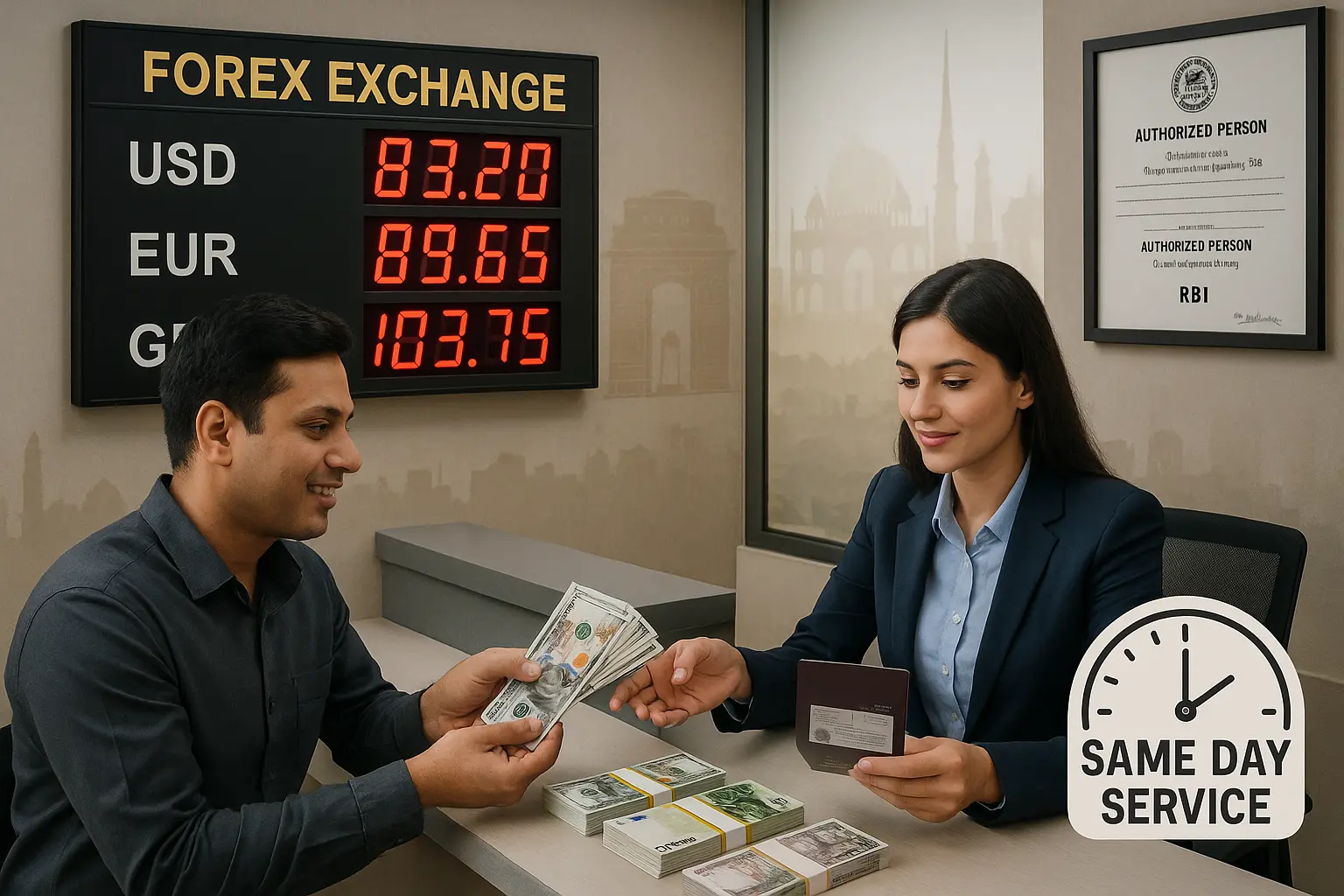
Modern forex platforms combine physical authorization with digital convenience. Customers can check live rates, upload documents online, and receive delivery while still operating under RBI oversight. This blend of regulation and technology has made forex more accessible without sacrificing safety.
How Exchange Rates Are Determined in India
Many people assume exchange rates are set by individual shops or websites. In reality, currency rates come from the global foreign exchange market — the largest financial market in the world.
The USD to INR rate, for example, is influenced by international trade, interest rate differences, oil prices, economic data, and investor sentiment. When demand for dollars increases, the rupee weakens. When demand drops, the rupee strengthens.
Authorized providers add a margin to the interbank rate to cover operational costs. This margin varies across institutions, which is why rates differ slightly between banks, counters, and online platforms. The base rate remains market-driven; the variation comes from service spreads.
Understanding this helps users avoid unrealistic expectations. No provider controls the global market. They only reflect it. Smart customers monitor live trends and exchange when pricing aligns with their travel or financial goals.
Why Documentation Is Required for Forex Transactions
Some people view documentation as a hassle. In reality, it is a protection mechanism. RBI requires identity verification to prevent money laundering, tax evasion, and illegal fund movement.
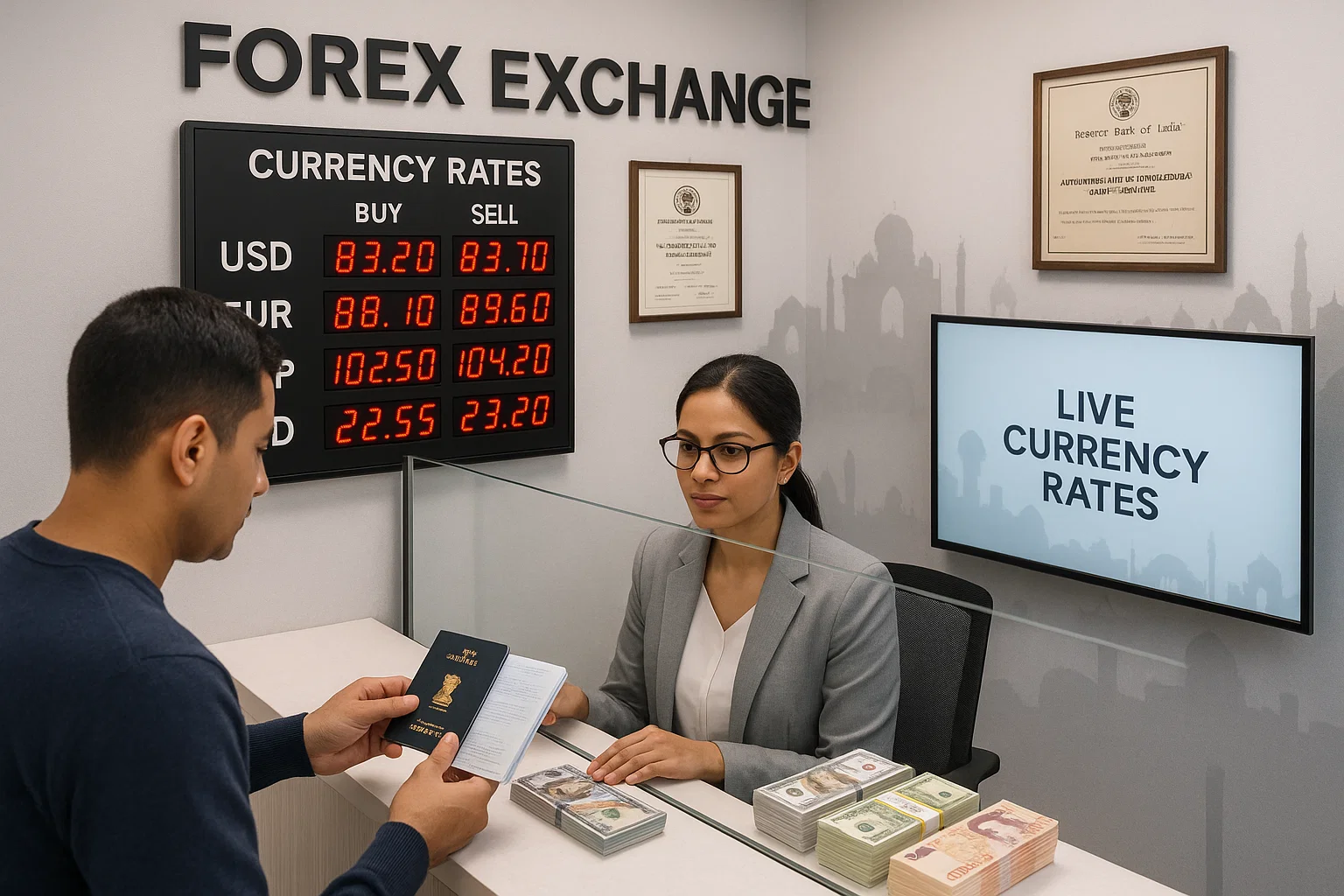
A passport confirms identity. A PAN card links the transaction to tax records. Travel proof validates the purpose. These documents do not restrict legitimate users; they protect them by ensuring that every exchange is legally recognized.
Without documentation, customers have no legal proof of transaction. If counterfeit currency appears or disputes arise, recovery becomes difficult. Structured forex platforms treat documentation as a safety shield, not an obstacle.
This compliance-first approach is what separates authorized providers from informal street exchange.
The Everyday User’s Experience: How Forex Actually Happens
From the customer’s perspective, forex is straightforward. A user checks rates, submits documents, confirms the amount, and receives currency. Behind the scenes, however, that transaction is recorded, verified, and reported through regulated channels.
The process feels simple because the infrastructure is complex and well-managed. Authorized providers handle regulatory compliance so customers can focus on their travel or payments without stress.
Digital platforms have reduced friction even further. Instead of visiting multiple counters, users can compare rates online, upload documents once, and complete the exchange from home. The legal backbone remains intact — only the interface has evolved.
This modernization explains why online forex has grown rapidly in India. Convenience and compliance now operate together rather than in opposition.
Understanding the Liberalized Remittance Scheme (LRS)
One of the most important concepts in India’s foreign exchange framework is the Liberalized Remittance Scheme, commonly called LRS. This scheme allows Indian residents to legally send a fixed amount of money abroad each financial year for approved purposes. These purposes include travel, education, medical treatment, investments, and family maintenance.
For the average traveler, LRS is the reason you can buy foreign currency without needing special government approval. It defines how much currency you can access and ensures that international spending remains traceable and lawful. Most users never directly interact with LRS paperwork, because authorized forex providers integrate these rules into their workflow automatically.
Understanding LRS helps remove fear around limits. Many people assume strict caps prevent normal travel spending. In reality, the limits are generous for legitimate purposes. The goal is not to restrict travel — it is to prevent illegal capital flight while allowing global mobility.
When customers exchange currency through structured providers, the compliance happens quietly in the background. The user experiences a smooth process, while the system maintains accountability.
Why Timing Matters in Currency Exchange
Foreign exchange is one of the few financial decisions that everyday travelers make without realizing it’s a financial decision. Many people treat forex as a last-minute chore, but timing can significantly affect cost.
Currency markets react to global economic events in real time. Interest rate announcements, oil prices, geopolitical developments, and trade data influence currency values daily. Even small fluctuations can impact the total rupee amount paid for travel money.
Smart users do not attempt to predict the market like traders. Instead, they monitor trends casually and exchange gradually rather than in a single rushed transaction. Planning ahead allows flexibility. Urgency removes choice.
This is why experienced travelers rarely exchange currency at airports unless absolutely necessary. Airport counters operate on urgency, not competitiveness. When time pressure disappears, better pricing becomes accessible.
Forex planning is less about speculation and more about avoiding emotional decisions.
Online Forex vs Traditional Counters
India’s forex ecosystem has evolved rapidly over the last decade. Traditionally, currency exchange required visiting a bank or a physical counter. Today, digital platforms allow customers to complete most of the process online.
The difference is not legality — both channels operate under RBI rules. The difference lies in efficiency and transparency. Online platforms aggregate demand, update rates more frequently, and reduce operational overhead. This often results in better visibility and smoother service.
Customers who use digital booking still interact with authorized entities. Compliance checks remain identical. The advantage is convenience: fewer visits, clearer pricing, and faster documentation handling.
Established forex providers, including companies like Princess Forex, have embraced this hybrid model — combining regulated infrastructure with modern online interfaces. This ensures customers benefit from both safety and speed.
The choice between online and offline is not about trust. It is about preference and timing.
Common Mistakes People Make During Forex Exchange
Many forex problems do not come from the system — they come from human behavior. The most common mistake is urgency-driven exchange. When travel is imminent, customers accept the nearest available rate instead of comparing options.
Another frequent error is using informal dealers promising unrealistic pricing. These offers often bypass compliance, exposing users to counterfeit currency or legal risk. The short-term savings rarely justify the long-term vulnerability.
Documentation delays also create friction. Travelers who prepare documents in advance experience smoother transactions than those scrambling at the last moment.
Some users attempt to “time the market” aggressively, waiting endlessly for the perfect rate. This approach creates paralysis. Currency markets move in cycles; perfection rarely arrives. Balanced planning is more effective than extreme patience or panic.
Forex works best when treated as preparation, not reaction.
Safety and Legal Protection in Forex Transactions
Foreign exchange involves physical cash, international compliance, and identity verification. Safety is not optional — it is built into the system.
Authorized providers issue receipts, maintain records, and verify authenticity. These safeguards protect customers from fraud and ensure accountability. Informal exchanges lack these protections. If something goes wrong, recovery becomes nearly impossible.
Carrying foreign currency also requires personal discipline. Travelers should distribute cash across luggage, wallets, and hotel safes instead of keeping everything in one place. Losing all travel money at once creates an unnecessary crisis.
The safest forex experience combines two elements: regulated exchange channels and responsible personal handling.
How Travelers Should Plan Their Forex Needs
Smart forex planning begins before booking flights. Travelers who understand their destination’s payment culture make better decisions. Some countries rely heavily on digital payments, while others still operate on cash-driven systems.
Researching daily expenses helps estimate realistic currency needs. Carrying excessive cash increases risk. Carrying too little forces emergency exchange at poor rates. Balance is the goal.
Many experienced travelers stagger their exchange. They convert a portion early, monitor rates casually, and complete the rest closer to departure. This reduces exposure to sudden currency spikes without requiring market expertise.
Forex planning is not about maximizing profit. It is about minimizing stress.
The Psychology Behind Currency Decisions
Money decisions during travel are emotional. Excitement, urgency, and unfamiliar environments influence judgment. This is why forex counters thrive in airports — not because travelers prefer them, but because emotional pressure overrides rational planning.
Understanding this psychology helps users make calmer decisions. Currency exchange should feel routine, not dramatic. When handled early, forex becomes a simple preparation step rather than a last-minute emergency.
The most financially efficient travelers are rarely the most aggressive. They are the most prepared.
The Future of Foreign Exchange in India
India’s forex landscape is becoming increasingly digital. Online verification, doorstep delivery, and live rate dashboards are transforming how people access currency. Yet regulation remains the foundation.
Technology is not replacing oversight — it is strengthening it. Automated reporting systems, digital audit trails, and encrypted documentation improve transparency while reducing friction.
As international travel and cross-border education continue to grow, forex systems will become more integrated with digital financial infrastructure. Customers will experience faster processes without sacrificing compliance.
The future of forex is not about removing rules. It is about making rules invisible through better design.
Conclusion
Foreign exchange in India is not a chaotic marketplace — it is a structured financial system designed to protect users while enabling global mobility. RBI oversight, FEMA regulations, and authorized providers create a framework where currency exchange remains safe, traceable, and accessible.
For everyday users, the key lesson is simple: forex works best when approached with awareness and preparation. Understanding limits, planning timing, choosing regulated channels, and avoiding emotional decisions transform currency exchange from a stressful task into a predictable process.
Modern platforms have made forex more convenient than ever. Companies that combine compliance with digital efficiency, such as Princess Forex through its online ecosystem, demonstrate how structured exchange can feel simple to the customer while remaining legally robust behind the scenes.
Currency exchange is not about chasing perfect rates. It is about making informed decisions that protect both your money and your peace of mind. When clarity replaces urgency, forex becomes just another part of smart travel planning.
FAQs
1. Is foreign exchange legal in India?
Yes. Foreign exchange is completely legal in India when done through RBI-authorized money changers, banks, or regulated forex platforms. Informal or unlicensed exchange is illegal.
2. Who regulates currency exchange in India?
The Reserve Bank of India (RBI) regulates all foreign exchange activities under FEMA (Foreign Exchange Management Act).
3. Can I buy foreign currency without a travel ticket?
Usually, a valid travel purpose is required. Some limited transactions may be allowed depending on rules, but travel proof is commonly needed.
4. How much foreign currency can I carry abroad from India?
Limits depend on destination and purpose. Under LRS, Indian residents can remit up to a large annual cap, but travel cash limits apply per trip.
5. Why do forex buying and selling rates differ?
The difference is called a spread. It covers operational cost, currency volatility, and service margin.
6. Is online currency exchange safe in India?
Yes, if done through RBI-authorized platforms that follow KYC and compliance procedures.
7. Do forex rates change every day?
Yes. Rates fluctuate continuously due to global economic events, demand, interest rates, and market sentiment.
8. Can I sell leftover foreign currency after returning to India?
Yes. You can legally reconvert unused foreign currency through authorized money changers.
9. Is airport currency exchange safe?
It is safe but usually more expensive due to urgency pricing and limited competition.
10. What documents are required for foreign exchange in India?
Typically passport, PAN card, and travel proof. Additional documents may be required depending on the purpose.