

Introduction
International travel from India has increased significantly over the last few years. Whether people are traveling for tourism, higher education, business meetings, or family visits abroad, one common requirement remains the same — foreign currency. Carrying the right currency in the right form is an essential part of preparing for any international trip.
Earlier, buying foreign currency meant visiting local forex dealers, banks, or airport exchange counters. The process often required long waits, limited currency availability, and sometimes unfavorable exchange rates. However, with the growth of digital financial services in India, travelers now have the convenience of buying foreign currency online before their trip.
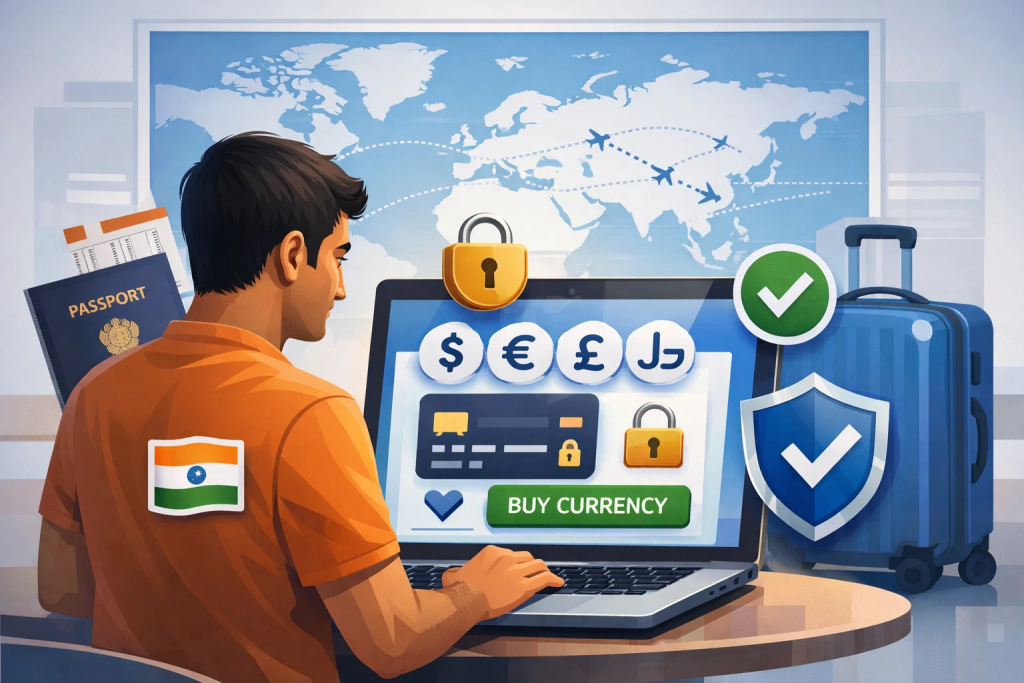
Online forex platforms allow travelers to compare exchange rates, place orders from home, upload documents digitally, and get currency delivered to their doorstep or pick it up from a nearby branch. While the convenience is undeniable, it is equally important to ensure that the process is safe, compliant with RBI regulations, and protected from fraud or hidden charges.
Many first-time travelers worry about questions such as:
- Is it safe to buy foreign currency online?
- How do I know if the forex provider is genuine?
- What documents are required for online currency exchange?
- Are online forex rates better than airport exchange counters?
This complete 2026 guide will walk you through how to safely buy foreign currency online in India, what precautions you should take, and how to ensure you get the best value for your money while staying within regulatory guidelines.
By the end of this article, you will understand the entire online forex purchase process, from choosing a trusted provider to receiving your currency before travel.
Why More Travelers in India Are Buying Foreign Currency Online
The shift toward digital forex services is not accidental. Over the past few years, online currency exchange has become increasingly popular among Indian travelers due to convenience, transparency, and competitive pricing.
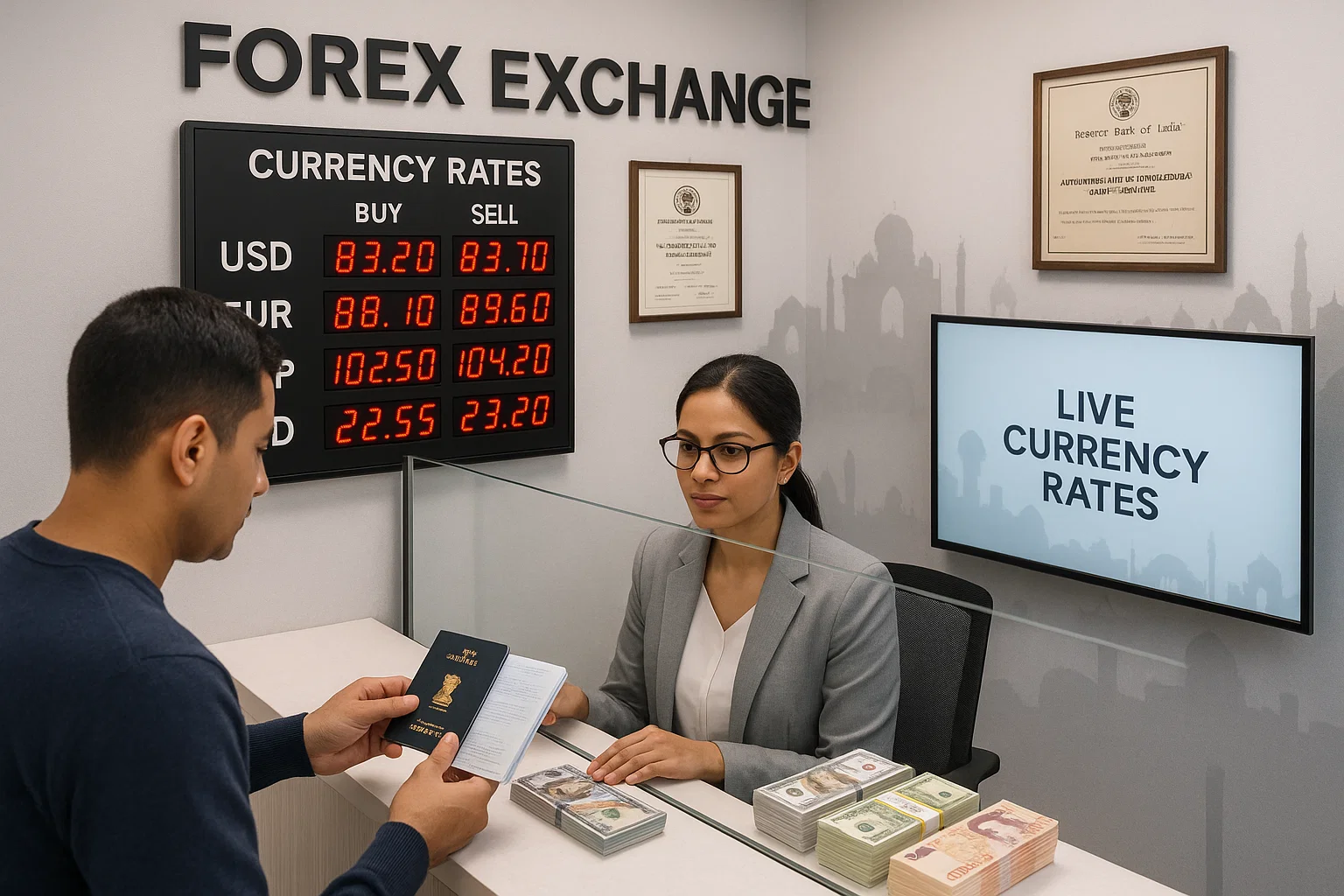
One of the biggest advantages of online forex platforms is the ability to compare exchange rates in real time. When travelers visit physical exchange counters or airport kiosks, they often have little room to negotiate or compare rates. Online platforms allow users to check rates instantly and place orders when rates are favorable.
Another reason for the growing popularity of online forex services is the ease of documentation. Traditionally, travelers had to carry multiple physical documents and fill out forms at exchange counters. Today, most digital forex platforms allow customers to upload documents such as their passport, visa, and air tickets online, making the process faster and more streamlined.
Online forex services also reduce the risk of last-minute panic purchases at airports. Airport currency exchange counters are convenient but usually offer higher exchange margins compared to regular forex providers. By purchasing currency online in advance, travelers can secure better rates and avoid unnecessary expenses.
Additionally, digital forex platforms often provide options such as home delivery of foreign currency, prepaid travel cards, and expert support for travelers who are unfamiliar with forex regulations.
Platforms such as Princess Forex and other regulated forex providers have made the process simpler for travelers who prefer a secure and transparent way to manage their travel currency.
Understanding RBI Rules Before Buying Foreign Currency Online
Before purchasing foreign currency online in India, it is important to understand the regulatory framework governing forex transactions. All foreign exchange activities in India are regulated by the Reserve Bank of India (RBI) under the Foreign Exchange Management Act (FEMA).
These regulations ensure that currency exchange services operate within legal boundaries and protect consumers from misuse or illegal transactions.
Under RBI guidelines, Indian residents can purchase foreign currency for various purposes, including tourism, education, medical treatment, and business travel. However, there are limits on how much foreign exchange can be purchased in a financial year under the Liberalised Remittance Scheme (LRS).
Currently, Indian residents can remit or spend up to USD 250,000 per financial year for permitted international transactions. This includes expenses such as travel, education, overseas investments, and medical treatment.
When buying currency online for travel purposes, the process typically falls under the Basic Travel Quota (BTQ), which allows travelers to carry a specific amount of foreign currency during their trip.
For example, travelers are usually allowed to carry:
- A certain amount of foreign currency in cash
- The remaining amount in prepaid forex travel cards
- Additional funds through international debit or credit cards
Forex providers are required to verify the purpose of travel and maintain proper documentation before completing the transaction. This is why travelers are often asked to provide documents such as their passport, visa, and confirmed travel tickets.
Understanding these regulations not only ensures compliance with the law but also helps travelers avoid delays or complications when purchasing foreign currency online.
Is It Safe to Buy Foreign Currency Online in India?
A common concern among first-time users is whether online forex purchases are safe. The answer is yes — buying foreign currency online can be completely safe, provided that the transaction is carried out through authorized and regulated forex providers.
The biggest safety factor lies in choosing the right platform. India has many forex service providers, but not all of them operate under proper regulatory approval. To ensure safety, travelers should only deal with RBI-authorized money changers or licensed forex dealers.
Authorized forex providers follow strict compliance standards that include identity verification, transaction tracking, and secure payment processing. These measures are designed to prevent fraud, money laundering, and unauthorized transactions.
Another important factor that contributes to the safety of online forex transactions is the use of secure payment gateways. Reputable forex platforms allow payments through trusted channels such as bank transfers, debit cards, or secure online payment systems.
Reliable platforms also provide transparent pricing, showing the exact exchange rate, applicable taxes, and service charges before confirming the order. This level of transparency helps customers avoid hidden fees that sometimes occur in offline exchange transactions.
Travelers should also ensure that the website they are using has proper security certifications, encrypted payment systems, and verified business credentials.
When dealing with trusted and regulated providers, the process of purchasing foreign currency online becomes both convenient and secure.
Step-by-Step Process to Buy Foreign Currency Online in India
For travelers who are new to digital forex services, the process may initially seem complicated. However, most online forex platforms follow a straightforward procedure that allows users to complete the transaction within a few simple steps.
1. Choose a Trusted Forex Platform
The first and most important step is selecting a reliable forex provider. Travelers should verify whether the platform operates under RBI authorization or partners with licensed money changers.
A trusted provider will typically display licensing information, customer support details, and transparent exchange rates on their website. Choosing a well-established provider significantly reduces the risk of fraud or poor service.
2. Select the Currency You Need
Once you have selected a forex platform, the next step is choosing the currency required for your destination. Most online forex providers offer major international currencies such as US Dollars, Euros, British Pounds, Singapore Dollars, and UAE Dirhams.
Travelers should estimate their expenses and choose an appropriate amount of currency. It is often recommended to carry a mix of cash and prepaid travel cards for better flexibility during international travel.
3. Upload Required Documents
To comply with RBI regulations, forex providers require travelers to submit identity and travel-related documents before completing the transaction.
Commonly required documents include:
- Passport copy
- Confirmed air tickets
- Visa (if applicable)
- PAN card for financial verification
These documents help the forex provider verify the purpose of the transaction and ensure compliance with FEMA regulations.
4. Make the Payment
After document verification, travelers can proceed with payment through secure digital channels. Most online forex platforms support payments through bank transfers, debit cards, or net banking.
The platform usually confirms the exchange rate at the time of payment, ensuring that travelers know exactly how much currency they will receive.
5. Choose Delivery or Pickup
After completing the transaction, travelers can either choose home delivery of foreign currency or pick it up from a nearby branch location.
Many travelers prefer home delivery because it saves time and eliminates the need to visit exchange counters before travel.
Documents Required to Buy Foreign Currency Online in India
When purchasing foreign currency online in India, documentation plays an important role. Since forex transactions are regulated under the Foreign Exchange Management Act (FEMA), service providers must verify the identity of customers and the purpose of travel before processing any currency exchange request.
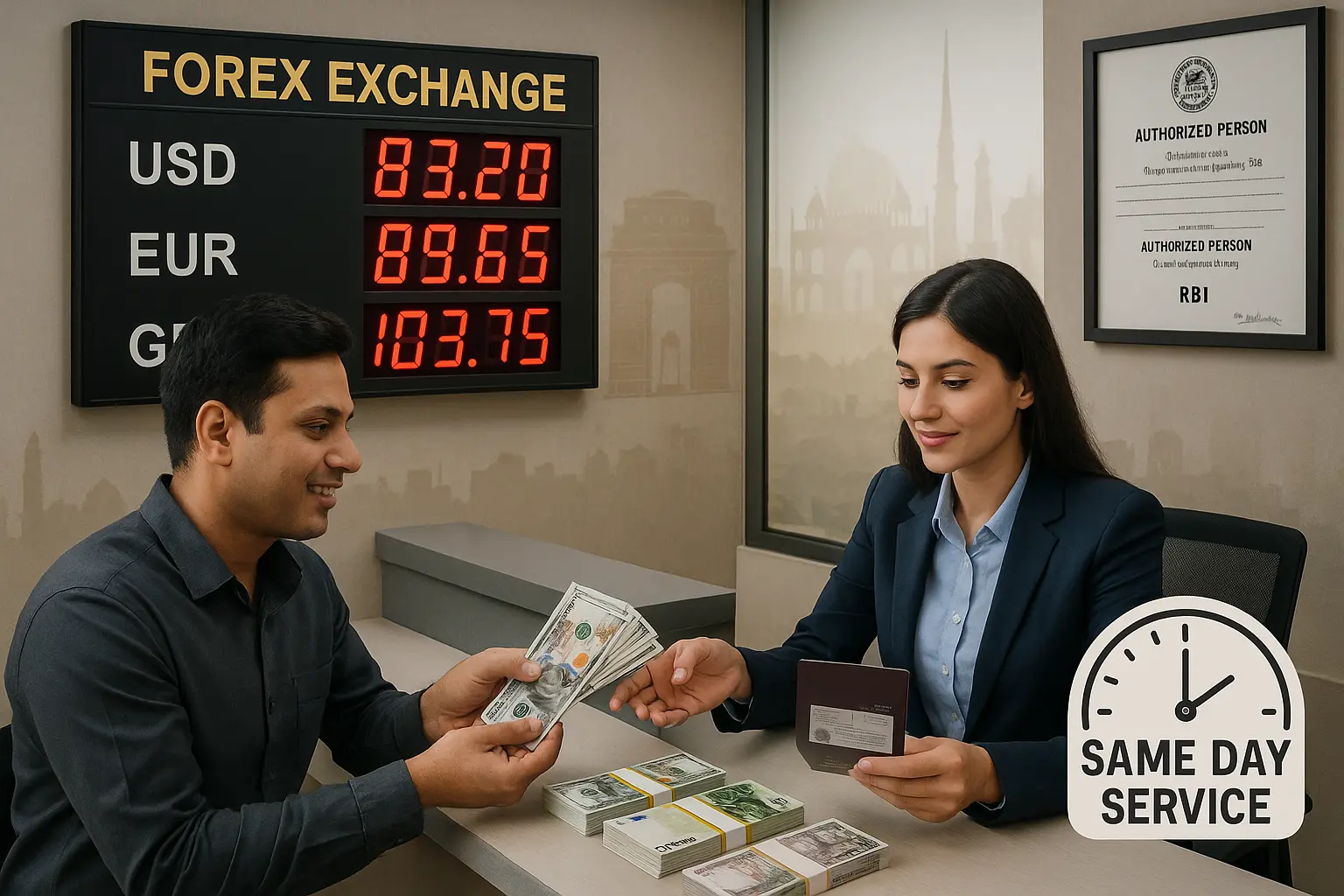
The most important document required for foreign currency exchange is the passport. The passport acts as the primary identity proof and confirms that the traveler is eligible to carry foreign currency for international travel. Forex providers typically require a scanned copy or a clear photo of the passport, which can easily be uploaded through their online platform.
Another important document is the confirmed air ticket. This helps the forex provider verify the date of travel and ensures that the currency is being purchased for a legitimate purpose. Some platforms may also ask for a copy of the visa, especially if the destination country requires one before travel.
In addition to travel documents, financial identification such as a PAN card may also be required. This is mainly used for regulatory reporting and financial compliance. The PAN card helps maintain transparency in financial transactions and ensures that the forex purchase is properly recorded.
For students traveling abroad, additional documents such as university admission letters or fee receipts may sometimes be required. Similarly, travelers going abroad for medical treatment or business purposes may be asked to provide supporting documents related to the purpose of their trip.
Although the documentation process may sound complex, most online forex platforms have simplified it significantly. Travelers can upload all required documents digitally, and verification is usually completed within a short time.
Common Mistakes Travelers Make When Buying Foreign Currency
While buying foreign currency online is convenient, many travelers make small mistakes that can lead to unnecessary expenses or inconvenience during their trip. Understanding these mistakes can help travelers make smarter decisions when planning their forex needs.
One of the most common mistakes is waiting until the last moment to buy foreign currency. Exchange rates fluctuate daily, and travelers who delay the purchase may end up paying more due to unfavorable currency movements. In addition, last-minute purchases often force travelers to rely on airport exchange counters, which typically offer higher exchange margins.
Another frequent mistake is carrying all the travel money in cash. While cash is useful for small expenses like taxis or local purchases, carrying large amounts of cash can be risky. Travelers should ideally carry a combination of foreign currency cash and prepaid travel cards to balance convenience and security.
Some travelers also overlook the difference between exchange rate and total cost. The exchange rate displayed on a website may look attractive, but the final cost may include additional service charges or taxes. It is important to review the complete transaction breakdown before confirming the purchase.
A lack of research is another issue that affects many first-time travelers. Not all forex providers offer the same rates or services. Comparing different providers helps travelers find better exchange rates and reliable delivery options.
Planning ahead and understanding these common mistakes can make the entire forex purchase process much smoother and more cost-effective.
Tips to Get the Best Exchange Rates for Foreign Currency
Getting the best value while buying foreign currency requires a bit of planning and awareness. Exchange rates fluctuate constantly due to global economic factors, currency demand, and market conditions. While it may not always be possible to predict rate movements perfectly, travelers can follow a few practical strategies to secure better deals.
One effective approach is monitoring exchange rates for a few days before making the purchase. Many online forex platforms allow users to track rate trends, helping travelers decide when to place their order. Even a small difference in the exchange rate can make a noticeable impact when exchanging large amounts of currency.
Another useful strategy is avoiding airport currency exchange counters whenever possible. Although airports offer convenience, they often include higher exchange margins and service charges. Purchasing foreign currency online in advance usually results in more competitive pricing.
Travelers should also consider ordering currency in advance instead of splitting multiple smaller transactions. Each transaction may involve processing fees, so consolidating the purchase can sometimes reduce overall costs.
Comparing multiple forex platforms is another smart practice. Different providers may offer slightly different rates depending on market conditions and operational costs. Checking a few trusted platforms before placing an order can help travelers find better value.
Some digital forex services, including providers like Princess Forex, allow travelers to view transparent exchange rates and order currency online with doorstep delivery, making the process both convenient and efficient.
Online Forex vs Airport Currency Exchange
Many travelers still rely on airport currency exchange counters because they seem convenient and accessible right before boarding an international flight. While airport exchange services can be helpful in emergencies, they are rarely the most cost-effective option.
Airport forex counters operate in a high-demand environment where travelers often need currency immediately. Because of this urgency, exchange rates at airports usually include higher margins compared to regular forex dealers or online platforms. This means travelers may receive less foreign currency for the same amount of Indian rupees.
Online forex platforms, on the other hand, allow travelers to plan their currency purchase in advance. By ordering currency online a few days before travel, customers can secure better exchange rates and avoid the pressure of last-minute transactions.
Another advantage of online forex services is the transparency in pricing. Reputable platforms clearly display the exchange rate, applicable taxes, and delivery charges before confirming the order. This helps travelers understand exactly how much currency they will receive.
Online platforms also offer additional options such as prepaid forex travel cards, which are widely accepted internationally and can provide added security compared to carrying large amounts of cash.
While airport counters can serve as a backup option in emergencies, buying foreign currency online is generally the more economical and convenient choice for most travelers.
Safety Tips to Avoid Forex Scams Online
Although the digital forex industry is well regulated in India, travelers should still take a few precautions to avoid potential scams or unreliable providers.
The first step is to verify whether the forex provider is authorized by the Reserve Bank of India or operates through a licensed money changer. Legitimate forex platforms typically mention their authorization details clearly on their website.
Travelers should also check the website’s security features. Secure platforms use encrypted connections, usually indicated by “https” in the website address. This ensures that personal information and payment details are protected during the transaction.
Another important safety practice is avoiding deals that seem unusually attractive. If a forex provider offers exchange rates that appear significantly better than market averages, it is worth investigating further. Extremely low rates may sometimes be used as bait for fraudulent transactions.
Reading customer reviews and checking the provider’s reputation can also help travelers make safer decisions. Established forex providers usually have a track record of customer service and transparent operations.
Finally, travelers should keep records of all transactions, including payment confirmations and order details. This documentation can be helpful in case any clarification or support is required later.
Conclusion
Buying foreign currency online in India has become one of the most convenient ways for travelers to prepare for international trips. Digital forex platforms have simplified what used to be a time-consuming process, allowing travelers to compare rates, upload documents, and receive currency without visiting physical exchange counters.
However, while the convenience of online forex services is undeniable, safety and planning remain essential. Travelers should always choose authorized forex providers, verify exchange rates carefully, and complete the necessary documentation to ensure compliance with RBI regulations.
Planning the currency purchase in advance can help travelers secure better exchange rates and avoid expensive airport exchanges. Carrying a balanced mix of foreign currency cash and travel cards can also make international spending easier and safer.
By following the guidelines outlined in this guide, travelers can confidently buy foreign currency online and focus on enjoying their journey instead of worrying about travel finances.
FAQs
1. Is it legal to buy foreign currency online in India?
Yes, buying foreign currency online is legal in India as long as the transaction is carried out through RBI-authorized forex dealers or licensed money changers.
2. What documents are required to buy foreign currency online?
Commonly required documents include a passport, confirmed travel tickets, visa (if required), and PAN card.
3. How much foreign currency can I carry while traveling abroad from India?
Travelers can carry foreign currency within the limits defined under the RBI’s Liberalised Remittance Scheme and Basic Travel Quota guidelines.
4. Is buying forex online cheaper than airport exchange?
In most cases, yes. Online forex providers usually offer better exchange rates compared to airport currency exchange counters.
5. How long does it take to receive foreign currency after ordering online?
Delivery time varies depending on the provider and location, but many forex platforms deliver within one to three working days.
6. Can foreign currency be delivered to my home?
Yes, many online forex providers offer doorstep delivery services for foreign currency orders.
7. Is it safe to pay online for foreign currency exchange?
It is safe when transactions are made through secure websites and authorized forex service providers.
8. Should I carry all my travel money in cash?
It is generally recommended to carry a combination of foreign currency cash and prepaid travel cards for better security and flexibility.
9. Can I cancel or modify my forex order after placing it online?
Most forex providers allow modifications or cancellations depending on the stage of order processing. Policies vary by provider.
10. When is the best time to buy foreign currency before travel?
It is usually advisable to purchase foreign currency a few days or weeks before travel while monitoring exchange rate trends.