

Introduction
Returning from an international trip often comes with a mix of emotions — memories, photos, experiences, and sometimes, leftover foreign currency sitting quietly in your wallet or travel pouch. While it may seem like a small detail, many travelers find themselves wondering what to do with the remaining currency once they are back in India.
It’s a common situation. During travel, people usually exchange a little extra currency to avoid running short in a foreign country. In many cases, some amount remains unused by the time the trip ends. This leftover money could be in the form of cash, coins, or balance in a forex travel card.
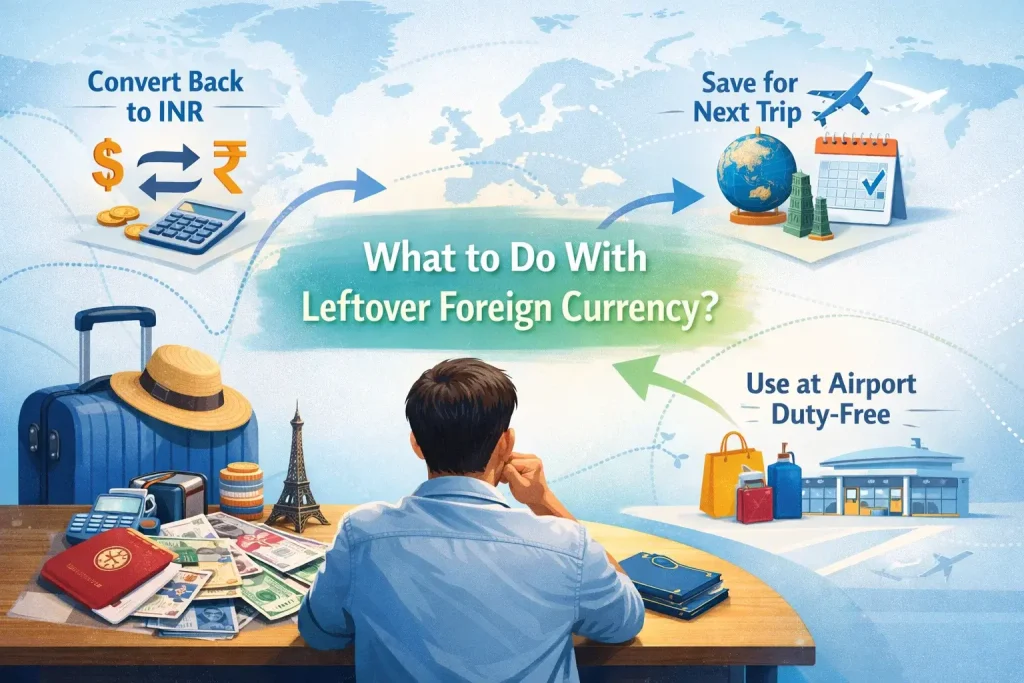
The question is — should you keep it for your next trip, convert it back to Indian Rupees, or explore other options?
The answer depends on several factors, including your future travel plans, the currency you hold, and current exchange rates. Understanding your options can help you make a better financial decision and avoid unnecessary losses.
In this guide, we’ll explore what you can do with leftover foreign currency after your trip, along with practical tips to help you manage it wisely.
Why Do Travelers Often Have Leftover Foreign Currency?
Before deciding what to do with leftover currency, it’s helpful to understand why this situation happens so frequently.
Most travelers prefer to carry slightly more foreign currency than required. This is a smart approach because running out of money in a foreign country can create unnecessary stress. Having a buffer ensures that you can handle unexpected expenses such as additional transport, meals, or last-minute purchases.
However, estimating the exact amount needed for a trip is not always easy. Daily expenses can vary depending on travel style, destination, and unforeseen situations. As a result, it is quite normal for travelers to return with some unused currency.
Another reason is the increasing use of digital payments and forex cards. Many travelers rely on cards for convenience and security, which means they may end up using less cash than expected.
In some cases, travelers also intentionally avoid spending the last bit of currency, especially small denominations or coins, because they may not be widely accepted everywhere.
All of these factors contribute to leftover foreign currency becoming a common post-travel situation.
Option 1: Convert Foreign Currency Back to Indian Rupees
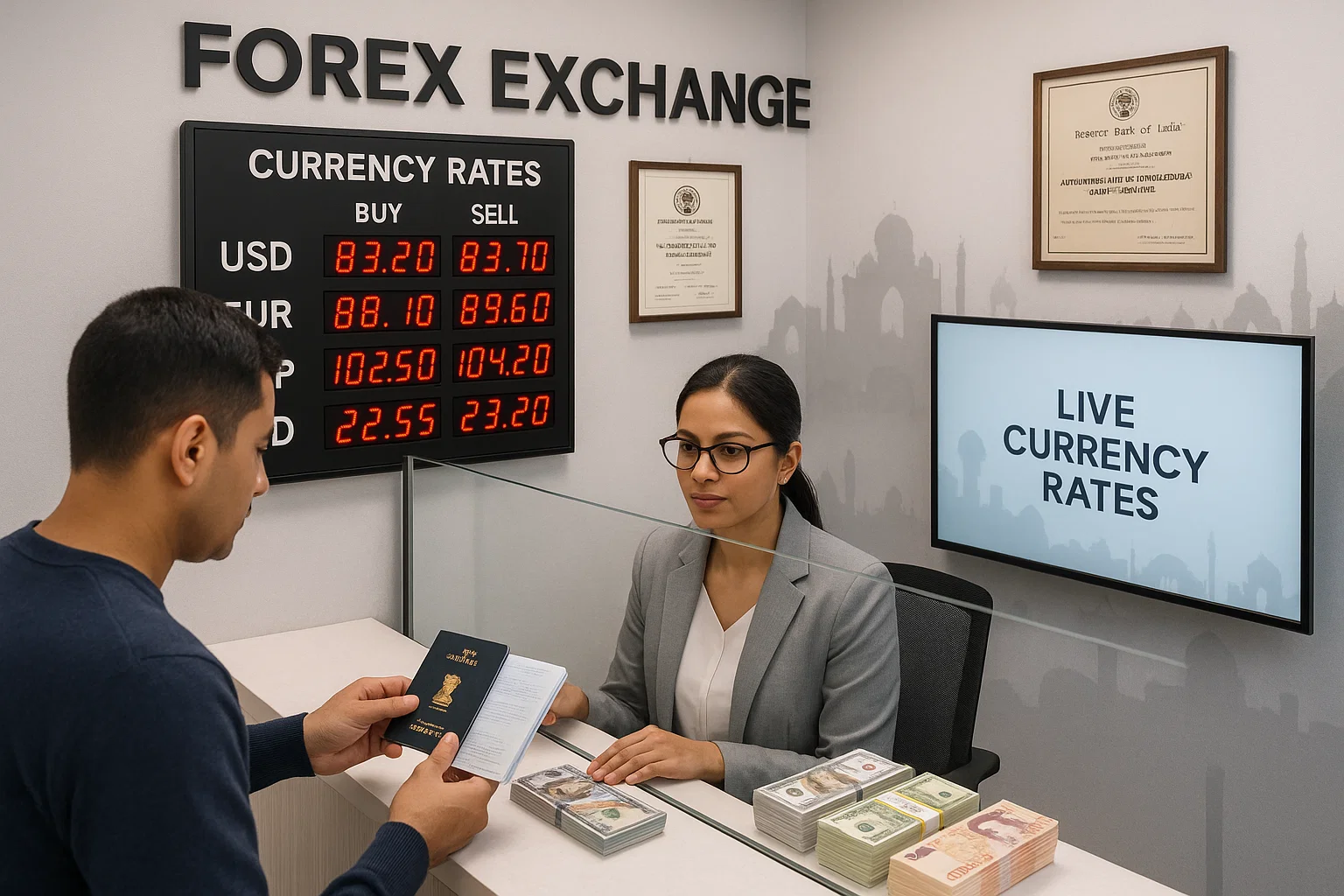
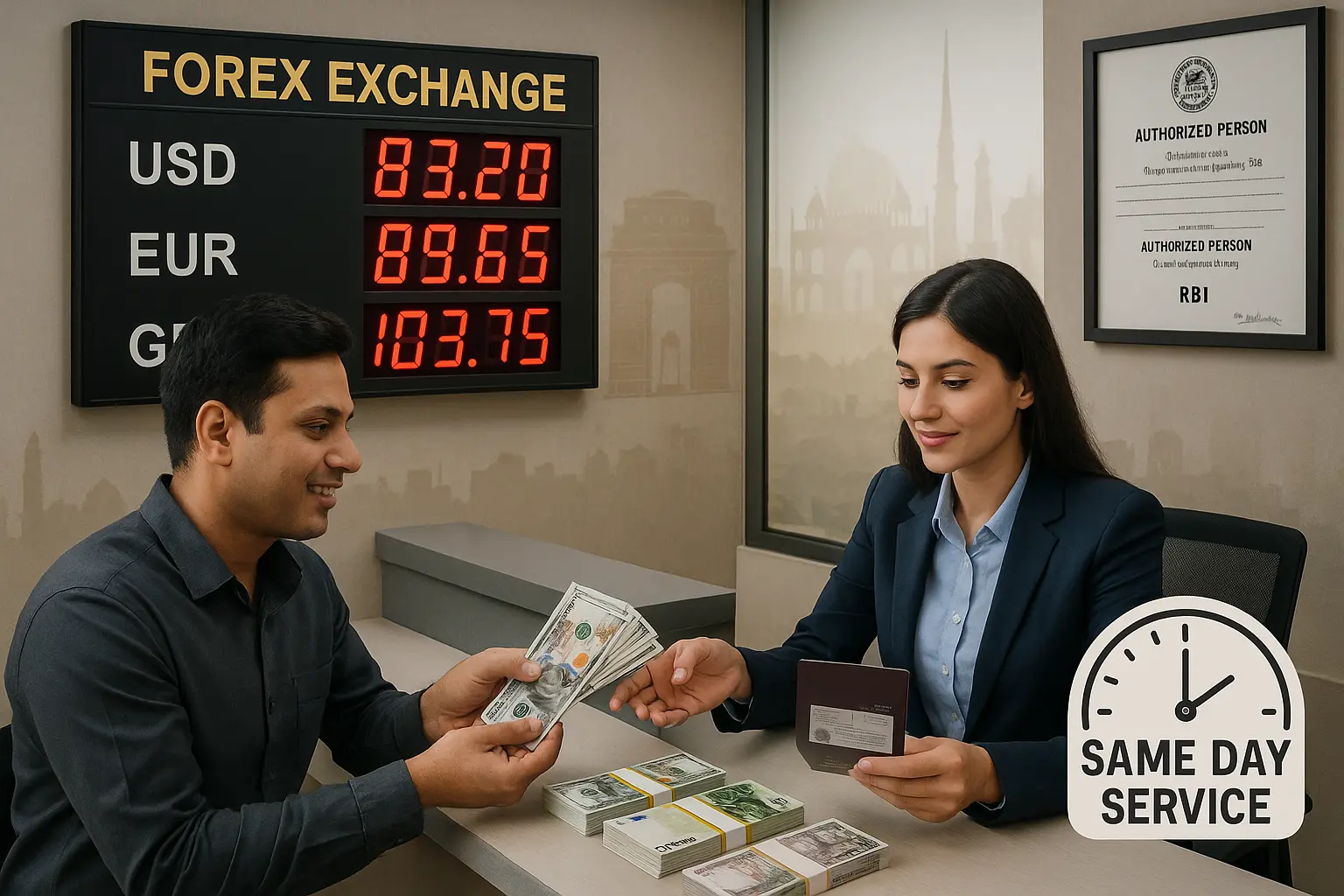
One of the most straightforward options is to convert your leftover foreign currency back into Indian Rupees.
This is usually done through authorized forex providers or licensed money changers. The process is simple and helps you recover the value of your unused currency.
However, there are a few important points to keep in mind.
Exchange rates fluctuate, so the rate at which you convert your currency back may be different from the rate at which you originally purchased it. This means you may receive slightly less or, in some cases, slightly more depending on market conditions.
Additionally, forex providers may include a margin in the conversion rate, which can also impact the final amount you receive.
Despite these factors, converting back to INR is a practical choice if you do not plan to travel abroad again in the near future.
Many travelers prefer this option to avoid holding onto foreign currency for an uncertain period.
Option 2: Keep It for Your Next Trip
If you are someone who travels internationally frequently, keeping your leftover foreign currency for future use can be a convenient option.
Currencies like US Dollars, Euros, and British Pounds are widely used across multiple countries, making them useful for future travel. Holding onto these currencies can save you the effort of exchanging money again before your next trip.
However, this option works best when you are reasonably certain that you will travel again soon. Keeping foreign currency for long periods may not always be ideal due to potential changes in exchange rates.
There is also the possibility of misplacing or forgetting about the currency over time, especially if it is stored without proper organization.
For frequent travelers, though, this approach can help reduce repeated conversion costs and simplify future travel planning.
Option 3: Use It at Duty-Free Shops or International Airports
Another option that many travelers overlook is using leftover foreign currency at duty-free shops or international airports.
Duty-free stores often accept multiple major currencies, especially US Dollars and Euros. If you have a small amount of currency left before your return flight, you can use it to make purchases at the airport.
This is particularly useful for spending smaller denominations that may not be convenient to exchange later.
However, it’s important to note that prices at duty-free stores may not always be the most economical. While this option helps you utilize leftover currency, it should be used thoughtfully to avoid unnecessary spending.
Option 4: Manage Remaining Balance in Forex Travel Cards
If you used a forex travel card during your trip, you may have a remaining balance after returning.
Unlike cash, this balance is stored digitally and can be managed more flexibly. You can either keep the balance for future travel or convert it back to INR through your forex provider.
Some travelers prefer to retain the balance if they plan to travel again soon, as it eliminates the need to reload the card later.
Platforms such as Princess Forex and other forex providers usually offer options to manage, reload, or withdraw the remaining balance from travel cards, making it easier to handle leftover funds.
What to Do With Leftover Coins and Small Denominations
One of the most common challenges travelers face is dealing with coins and small denomination notes after returning from a trip. While larger currency notes can usually be exchanged easily, coins are often not accepted by forex providers in India.
This means that if you return with foreign coins, you may not be able to convert them back into Indian Rupees through standard channels.
Because of this, many travelers try to use coins before leaving the destination country. Small purchases such as snacks, local transport, or tipping can be good ways to utilize these denominations.
If coins still remain, some travelers choose to keep them as souvenirs or collect them as part of their travel memories. Others may save them for future trips to the same destination.
Understanding this limitation in advance can help you plan your spending more effectively during your trip and reduce leftover coins.
Smart Tips to Minimize Leftover Foreign Currency
While leftover currency is common, a little planning can help reduce it significantly.
One effective approach is to estimate your daily expenses carefully before your trip. By understanding how much you are likely to spend on food, transport, and activities, you can exchange a more accurate amount of currency.
Another useful strategy is to rely on a combination of cash and digital payment options. Carrying too much cash often leads to leftover currency, while using forex cards or international cards can help you manage expenses more precisely.
Many experienced travelers also monitor their spending during the trip and adjust their usage accordingly. If they notice they have extra cash left toward the end of the trip, they try to use it for necessary purchases instead of returning with unused currency.
Planning your forex in stages, rather than exchanging everything at once, can also help you manage your funds more efficiently.
Common Mistakes to Avoid With Leftover Currency
When dealing with leftover foreign currency, there are a few common mistakes that travelers should avoid.
One of the biggest mistakes is holding onto currency without a clear plan. If you are not likely to travel again soon, keeping foreign currency for long periods may not be the best decision, especially if exchange rates change.
Another mistake is exchanging currency at the last minute without checking rates. Just like buying forex, selling it back without comparing rates can result in unnecessary losses.
Some travelers also forget about leftover currency stored in bags, wallets, or drawers, which can lead to it being misplaced or unused for years.
In addition, relying on unauthorized exchange sources to quickly convert leftover currency can be risky. It is always safer to use authorized forex providers for secure transactions.
Avoiding these mistakes can help you manage your leftover currency more effectively and retain better value.
How to Decide: Convert Now or Keep It?
Deciding whether to convert your leftover foreign currency or keep it depends on your travel plans and financial preferences.
If you do not have any immediate plans to travel abroad, converting the currency back to INR is usually the more practical choice. It allows you to utilize the value of your money instead of keeping it unused.
On the other hand, if you are a frequent traveler or already planning another international trip, holding onto commonly used currencies like USD or EUR can be convenient.
It’s also worth considering the current exchange rate trends. If rates are favorable, converting your currency sooner may help you avoid potential losses later.
Some travelers prefer a balanced approach — converting a portion of the currency back to INR while keeping a small amount for future use.
Taking a few minutes to evaluate your situation can help you make a more informed and practical decision.
Conclusion
Leftover foreign currency is a common part of international travel, but managing it wisely can make a difference in your overall financial planning.
Whether you choose to convert it back to Indian Rupees, keep it for future travel, or use it at airports and duty-free stores, each option has its own benefits depending on your situation.
Understanding how exchange rates work, planning your currency usage, and avoiding common mistakes can help you retain better value from your unused forex.
With a little awareness and planning, you can ensure that even after your trip ends, your travel finances remain well-managed and efficient.
FAQs
1. Can I exchange leftover foreign currency back to INR in India?
Yes, you can convert foreign currency back to INR through RBI-authorized forex providers or licensed money changers.
2. Do forex providers accept foreign coins?
Most forex providers do not accept coins, so it is better to use them before leaving the destination country.
3. Is it better to keep leftover foreign currency for future travel?
It depends on your travel plans. Frequent travelers may benefit from keeping commonly used currencies.
4. Will I get the same exchange rate when converting currency back?
No, exchange rates fluctuate, so the rate may differ from your original purchase.
5. Can I use leftover currency at the airport?
Yes, many duty-free shops accept major currencies like USD and EUR.
6. What should I do with leftover balance in a forex card?
You can either keep it for future travel or convert it back to INR through your provider.
7. Is it safe to store foreign currency for a long time?
It is generally safe, but keeping it for too long may not be ideal due to exchange rate changes.
8. Can I exchange foreign currency without travel proof?
In most cases, basic documentation may still be required by authorized providers.
9. How can I avoid leftover foreign currency in future trips?
Plan your expenses carefully and use a mix of cash and digital payment options.
10. Should I exchange leftover currency immediately after returning?
It depends on your plans and current rates, but many travelers prefer not to delay unnecessarily.