

Introduction
When planning an international trip, most travelers focus on getting the “best exchange rate.” It feels like the smartest way to save money—and in many cases, it is. But what many people don’t realize is that the rate you see is not always the final cost you pay.
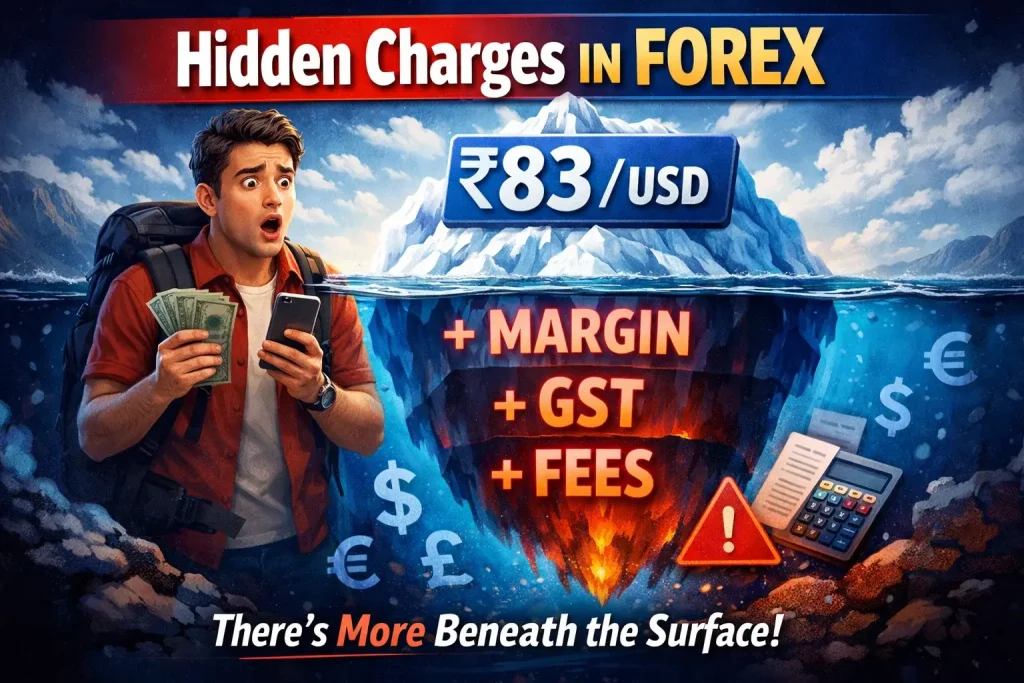
Currency exchange often comes with hidden charges that are not immediately visible. These can quietly increase your overall expense without you even noticing.
From small margins added to the exchange rate to additional service fees and taxes, these hidden costs can make a significant difference—especially when you are converting larger amounts.
For example, a slight difference of ₹1 in the exchange rate may not seem like much, but when applied to a large transaction, it can result in a noticeable increase in cost.
The challenge is that these charges are not always clearly explained, which is why many travelers end up paying more than expected.
In this guide, we will uncover the hidden charges involved in currency exchange and help you understand how to avoid them, so you can make smarter financial decisions during your travels.
Why Hidden Charges Matter More Than You Think
At first glance, currency exchange may seem straightforward—you check the rate, convert your money, and receive the foreign currency.
However, the actual cost of currency exchange is not just the rate—it’s the total value after all charges are applied.
These hidden costs matter because they can:
- Increase your overall travel expenses
- Reduce the value of your converted money
- Make one provider seem cheaper than another when it’s not
Many travelers only compare visible exchange rates and ignore other components, which leads to incorrect decisions.
Understanding the full cost helps you evaluate offers more accurately and avoid unnecessary expenses.
What Are Hidden Charges in Currency Exchange?
Hidden charges in currency exchange refer to the additional costs that are not always clearly highlighted upfront.
These charges can be included in:
- The exchange rate itself
- Service or processing fees
- Taxes and other applicable charges
Sometimes, these costs are bundled together, making it difficult to identify them individually.
This is why two providers offering slightly different rates can end up having very different total costs.
Being aware of these hidden elements is the first step toward making better forex decisions.
The Forex Margin: The Most Common Hidden Cost
One of the most important hidden charges is the forex margin.
The forex margin is the difference between the interbank exchange rate (the rate at which banks trade currency among themselves) and the rate offered to customers.
This margin is how providers earn revenue, and it is usually built into the rate you see.
For example, if the interbank rate is ₹83 per USD, a provider may offer ₹84 or ₹85 per USD. The difference may seem small, but it adds up quickly when you are exchanging large amounts.
The key challenge is that most travelers are not aware of the interbank rate, so they cannot easily identify how much margin is being applied.
Service Fees and Processing Charges
Another common hidden cost comes in the form of service fees or processing charges.
These fees may be applied separately or included within the transaction cost.
Some providers charge:
- A fixed service fee
- A percentage-based processing fee
- Additional handling charges
In many cases, these fees are not highlighted prominently, which can lead to confusion.
Even if the exchange rate appears competitive, these extra charges can increase the final amount you pay.
Taxes on Currency Exchange (GST Impact)
One of the most commonly ignored components in forex transactions is GST (Goods and Services Tax).
In India, GST is applicable on currency exchange transactions, but it is not calculated in a simple flat manner. Instead, it is applied based on the difference between buying and selling rates or the total transaction amount.
This means that even if the exchange rate looks attractive, GST can slightly increase the final cost.
For smaller transactions, the impact may seem minimal. However, for larger conversions—such as travel, education, or business payments—the added tax can become noticeable.
Many travelers don’t account for this while comparing rates, which can lead to a mismatch between expected and actual costs.
Hidden Charges in Card-Based Transactions
If you are using debit or credit cards abroad, there are several hidden charges that can apply during transactions.
One of the most common is the foreign transaction fee, which is usually a percentage of the transaction amount. This fee is charged every time you make a payment in a foreign currency.
Another hidden cost comes from currency conversion charges, where the bank applies its own exchange rate, often including an additional margin.
There is also something called Dynamic Currency Conversion (DCC). This happens when you are given the option to pay in Indian Rupees instead of the local currency. While it may seem convenient, it usually involves a higher conversion rate and additional fees.
These charges are often not clearly visible at the time of payment, making them easy to overlook.
ATM Withdrawal Charges Abroad
Withdrawing cash internationally using a debit or forex card can also include hidden costs.
Each withdrawal may involve:
- A fee charged by your bank
- A fee charged by the local ATM operator
- Currency conversion charges
These costs can vary depending on the country and the bank.
Frequent withdrawals can significantly increase your overall expenses, especially if you are withdrawing smaller amounts multiple times.
This is why planning your withdrawals carefully is important.
Airport Currency Exchange: The Convenience Cost
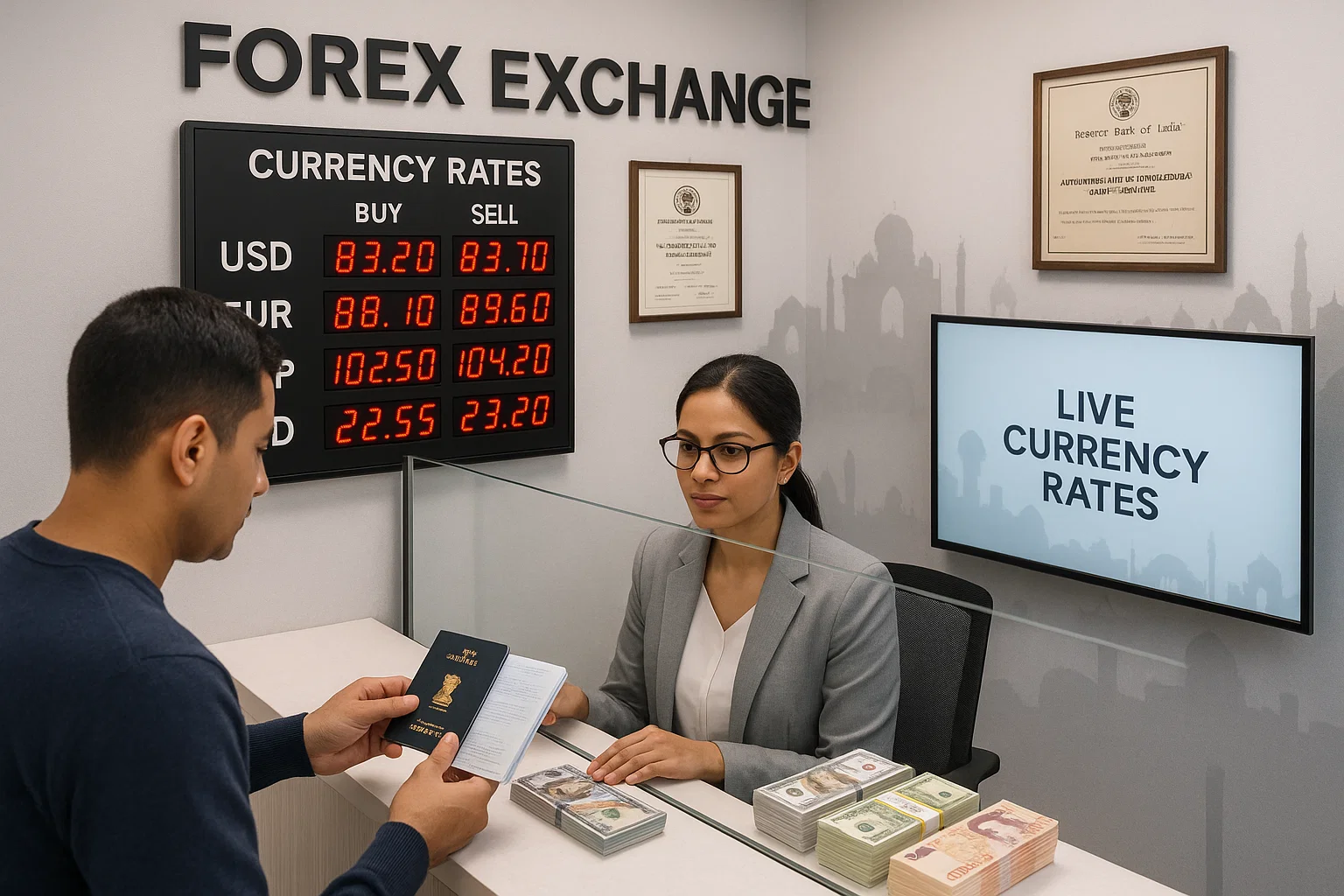
Airport currency exchange counters are often considered the most convenient option, especially for last-minute travelers.
However, this convenience usually comes at a cost.
Exchange rates at airports are often less competitive compared to online or city-based providers. In addition, margins and service charges may be higher due to operational costs.
Many travelers choose airport exchange due to urgency, without realizing that they are paying a premium for it.
While it can be useful in emergencies, relying entirely on airport exchange is not always the most cost-effective choice.
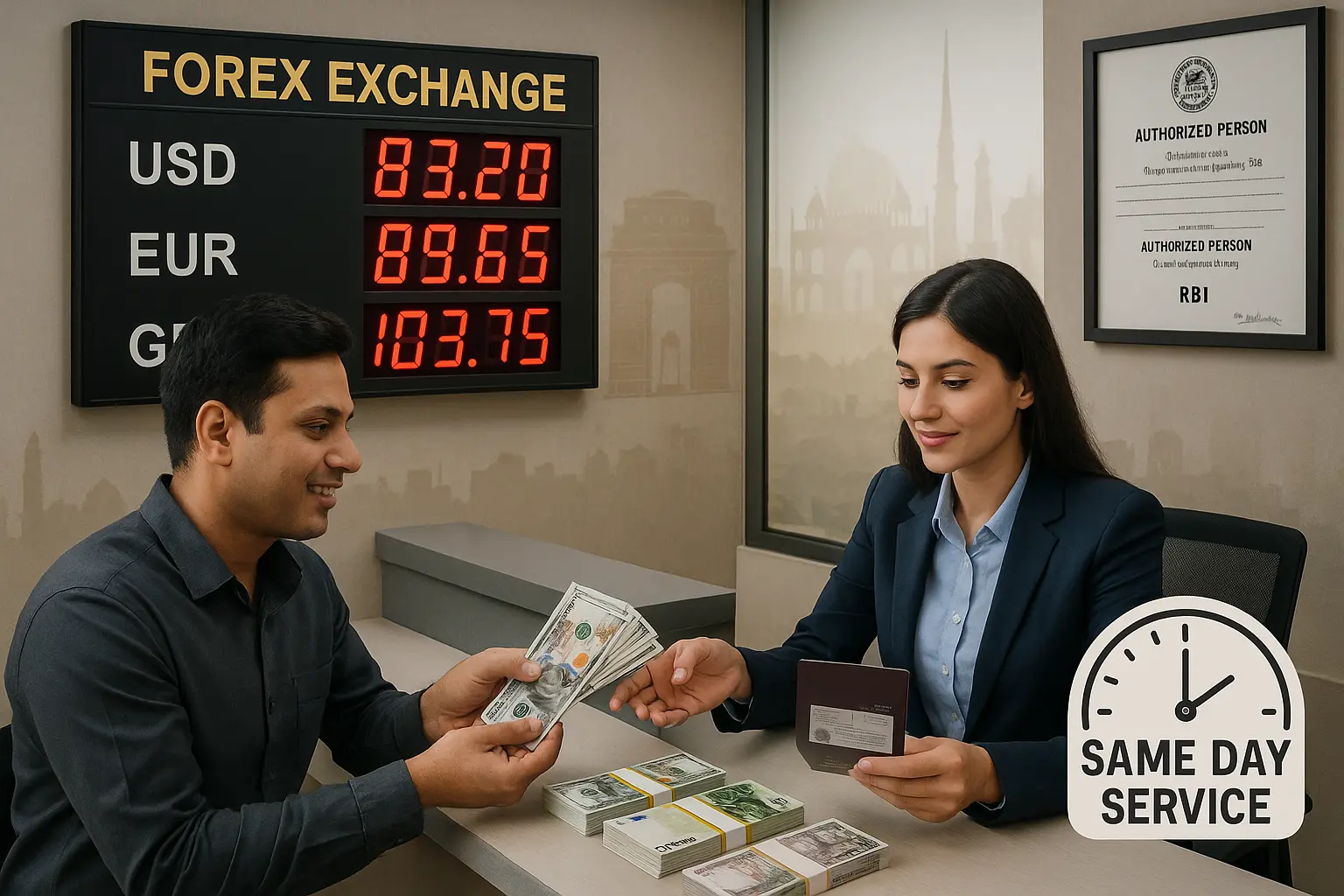
Hidden Costs in Online vs Offline Forex
Both online and offline currency exchange options have their own cost structures.
Online platforms may offer competitive rates, but sometimes include delivery charges, handling fees, or minimum order requirements.
Offline exchanges may appear straightforward but can include negotiable margins or unlisted service fees.
The key difference is transparency—some platforms clearly display the full cost, while others may not.
Understanding how these costs are structured helps you compare options more effectively.
Real-Life Example: How Hidden Charges Add Up
Let’s understand this with a simple example.
Imagine you are exchanging ₹1,00,000 into USD.
At first glance, Provider A offers a rate of ₹83 per USD, while Provider B offers ₹84 per USD. Naturally, you may feel that Provider A is cheaper.
But here’s where hidden charges come into play.
Provider A may include a higher forex margin, add a small processing fee, and apply GST. Provider B, even with a slightly higher visible rate, may have lower additional charges.
In the end, the total amount you receive in USD could be nearly the same—or sometimes even better with the second option.
This is why comparing only the exchange rate is not enough. The final value after all charges is what truly matters.
How to Identify Hidden Charges Before You Exchange
The key to avoiding extra costs is knowing what to look for before making a transaction.
Start by asking for a complete cost breakdown. This includes the exchange rate, margin, service fee, and taxes.
If a provider is not transparent about these details, it’s a sign that additional costs may be involved.
You should also compare the offered rate with the live or interbank rate. This gives you an idea of how much margin is being applied.
For card payments, always check your bank’s foreign transaction fees and conversion policies in advance.
When using ATMs abroad, be aware of both bank charges and local operator fees.
Being informed helps you make better decisions.
Practical Ways to Avoid Hidden Charges
Avoiding hidden charges does not require complex strategies—just a bit of awareness and planning.
One of the simplest steps is to plan your forex in advance. Last-minute decisions often limit your options and increase costs.
Always compare multiple providers instead of choosing the first available option.
When paying abroad, choose to pay in the local currency instead of your home currency to avoid dynamic conversion fees.
Limit frequent ATM withdrawals and withdraw larger amounts when necessary to reduce repeated charges.
It is also helpful to check live exchange rates before making a transaction, so you understand the market value.
Working with reliable and transparent providers like Princess Forex can also help you avoid unnecessary hidden costs and ensure a smoother experience.
Why Awareness Is More Important Than Discounts
Many travelers look for “best rates” or “discount offers,” but what really matters is transparency and total cost clarity.
A slightly lower rate does not always mean a better deal if hidden charges are involved.
Being aware of how forex pricing works gives you more control over your spending.
When you understand where costs come from, you can make smarter choices and avoid surprises.
This awareness not only saves money but also improves your overall travel experience.
Conclusion
Hidden charges in currency exchange are often overlooked, yet they can have a significant impact on your overall travel budget. What appears to be a simple transaction can include multiple cost components such as margins, service fees, taxes, and conversion charges.
The key takeaway is that the exchange rate alone does not define the total cost. It’s the combination of all these elements that determines how much value you actually receive.
By understanding how these charges work, comparing providers carefully, and planning your forex in advance, you can avoid unnecessary expenses and make more informed decisions.
Being aware of hidden costs also helps you choose transparent and reliable forex providers. Services like Princess Forex aim to simplify this process by offering clarity and structured pricing, making it easier for travelers to manage their currency needs.
At the end of the day, international travel should be about experiences, not unexpected expenses. With the right knowledge and preparation, you can ensure that your money works efficiently for you throughout your journey.
FAQs
1. What are hidden charges in currency exchange?
Hidden charges are additional costs such as forex margins, service fees, and taxes that are not always clearly visible upfront.
2. Is the exchange rate the final price I pay?
No, the exchange rate is only one part of the cost. Additional charges may increase the total amount.
3. What is a forex margin?
Forex margin is the difference between the interbank rate and the rate offered to customers.
4. Does GST apply to currency exchange?
Yes, GST is applicable on forex transactions in India based on the transaction value or margin.
5. What are foreign transaction fees on cards?
These are charges applied when you use debit or credit cards in a foreign currency.
6. Why is airport currency exchange more expensive?
Airport exchange services often have higher margins and fees due to convenience and operational costs.
7. What is dynamic currency conversion (DCC)?
DCC allows you to pay in your home currency abroad, but it usually comes with higher conversion rates and fees.
8. How can I avoid hidden charges in forex?
Compare providers, check full cost breakdowns, plan in advance, and avoid unnecessary conversions.
9. Are online forex platforms cheaper than offline?
They can be, but you should still check for delivery charges or additional fees.
10. Why is it important to check live exchange rates?
Live rates help you understand the actual market value and identify hidden margins.