

Introduction
It is almost a ritual. You finish packing, head to the airport, clear security, and suddenly realize you still need foreign currency. Just a small amount, you tell yourself. After all, there are exchange counters right inside Delhi Airport. Quick. Convenient. Done.
But convenience always carries a price.
Currency exchange at Delhi Airport is not illegal, unsafe, or fraudulent. It is fully authorized and regulated. The real question is not whether it is safe. The real question is whether it is financially efficient.
Most travellers assume the rate difference is minor. In reality, airport forex pricing works on a completely different business model compared to city-based authorized money changers. Understanding that model is the first step in deciding whether you should avoid airport exchange or use it strategically.
This guide breaks down how airport currency exchange works, why rates are usually higher, and what the actual hidden cost looks like in real numbers.
Why Airport Exchange Exists — And Why It’s Expensive
Delhi Airport is one of the busiest international hubs in India. Thousands of travelers depart daily. Forex counters inside the terminal operate under high rent, premium space cost, and round-the-clock staffing.
Airport counters do not compete aggressively on price. They compete on urgency and convenience.
Travelers at airports usually fall into three categories:
those who forgot to exchange earlier, those who underestimated their needs, and those who prefer “last-minute comfort.” All three groups share one thing — limited time to compare options.
When customers have no alternative and no time, price sensitivity drops. This changes pricing behavior.
Airport counters know that travelers are unlikely to leave the terminal to check city rates. That reduced competition allows wider spreads between buying and selling rates.
This is not exploitation. It is economics.
The Real Cost Difference: What You Might Be Losing
Let’s understand this practically.
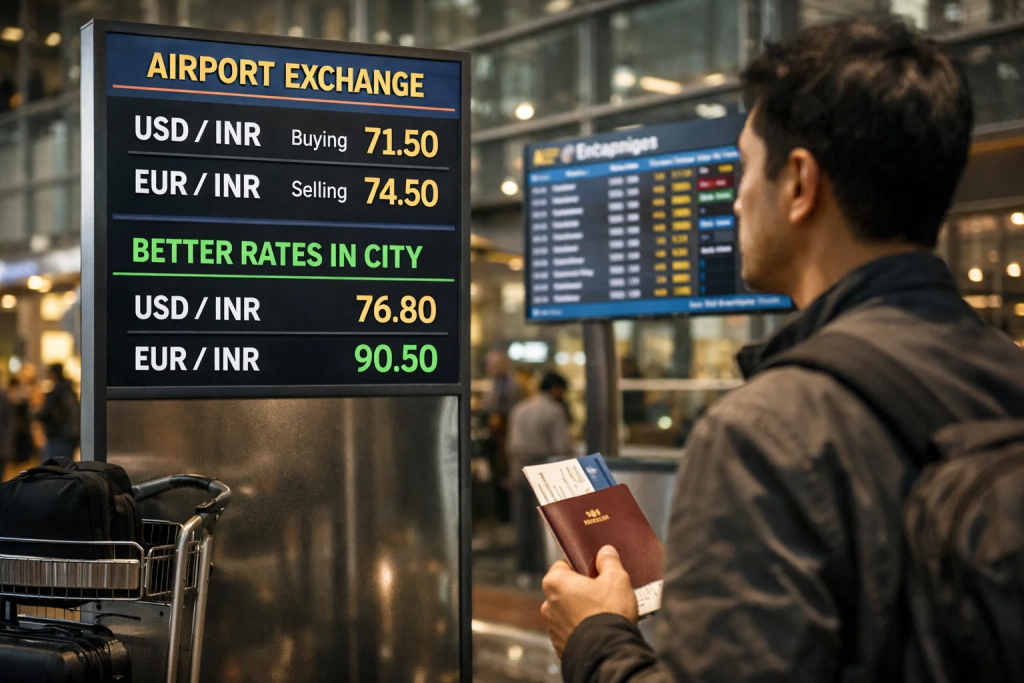
Imagine the interbank USD to INR rate is ₹83.00. A competitive city-based authorized forex provider may offer USD at ₹83.80 or ₹84.20 depending on market spread.
Now consider an airport counter. The same USD may be priced at ₹85.50 or even higher depending on timing and demand.
That difference of ₹1 to ₹2 per dollar looks small at first glance. But multiply it.
If you exchange $1,000 at an airport with a ₹1.50 higher rate, you pay ₹1,500 extra instantly. On $2,000, that becomes ₹3,000. On family travel budgets, the difference becomes even more noticeable.
The premium is not a service charge listed separately. It is embedded inside the rate spread.
Because the rate board shows only the final number, many travelers never realize the hidden cost.
Convenience hides expenses very quietly.
Buying vs Selling at the Airport
Airport pricing affects both buying and selling foreign currency.
When buying foreign currency before departure, you often pay more. When selling leftover currency after returning, you may receive less than what city-based counters would offer.
This double disadvantage compounds the financial impact.
For example, if you purchase USD at a higher airport rate and later sell leftover currency back at a lower airport buying rate, the spread gap widens further.
It is not just about a single transaction. It is about the full travel cycle.
When Airport Exchange Makes Sense
Despite the cost difference, airport exchange is not always a bad decision. There are situations where it becomes practical.
If you need a small emergency amount — say $100 or $200 — the difference in total rupees may be manageable. The convenience outweighs the marginal loss.
If you forgot entirely and boarding is imminent, airport exchange prevents greater inconvenience abroad.
If your travel involves immediate taxi, SIM card, or basic expense needs upon landing, securing minimal currency may justify the premium.
The key word is minimal.
Airport forex works best as a backup solution, not a primary strategy.
The Psychology Behind Last-Minute Exchange
Airport exchange thrives on human behavior.
When departure time approaches, stress levels rise. People shift from analytical thinking to problem-solving mode. The brain prioritizes speed over savings. That is why travelers rarely calculate per-dollar differences at the terminal.
This urgency reduces price comparison. It eliminates negotiation. It transforms currency exchange into a quick relief purchase instead of a financial decision.
Understanding this psychology helps travelers avoid predictable loss.
Forex is emotional when done late. It is rational when done early.
Comparing Airport Exchange with City-Based Authorized Providers
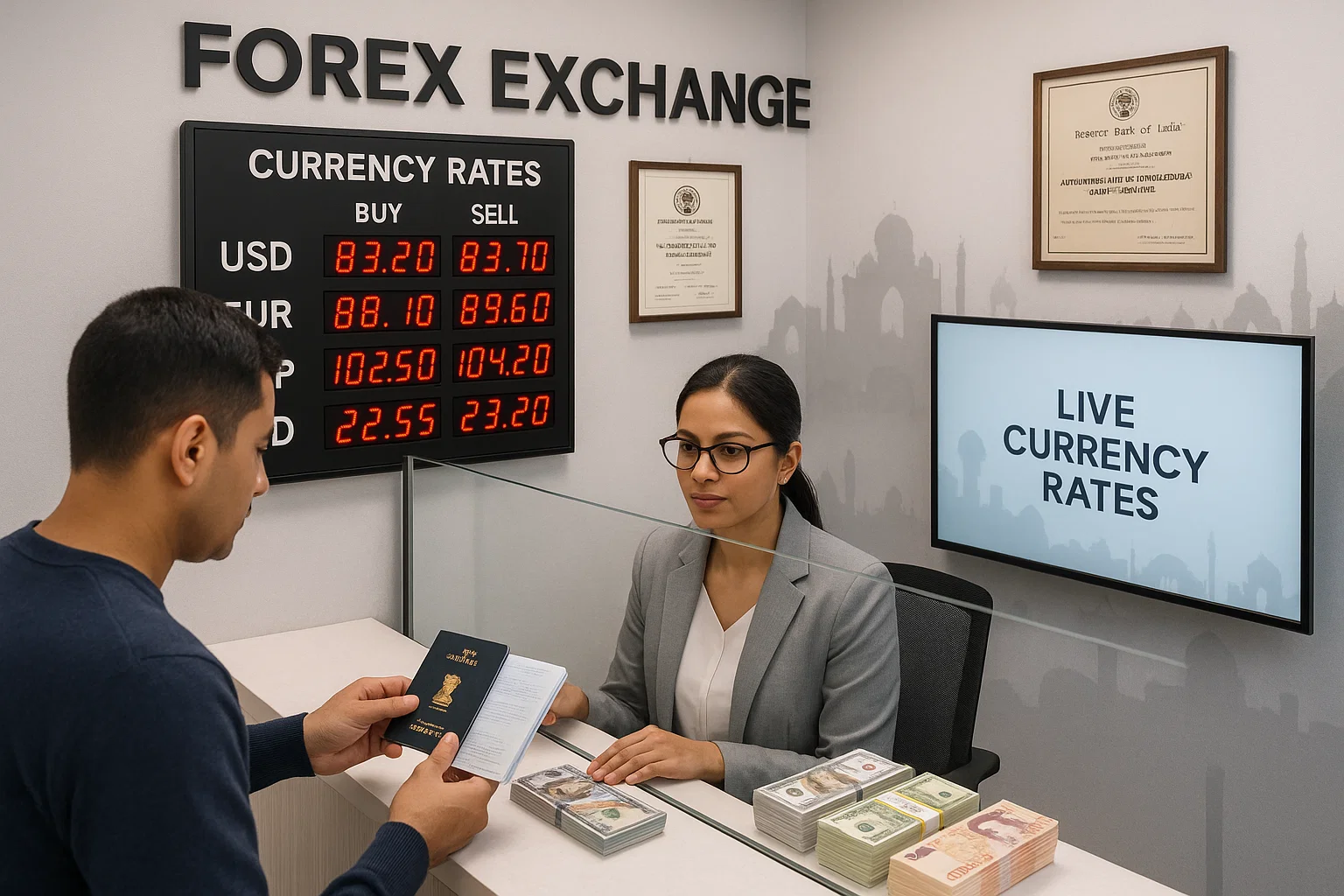
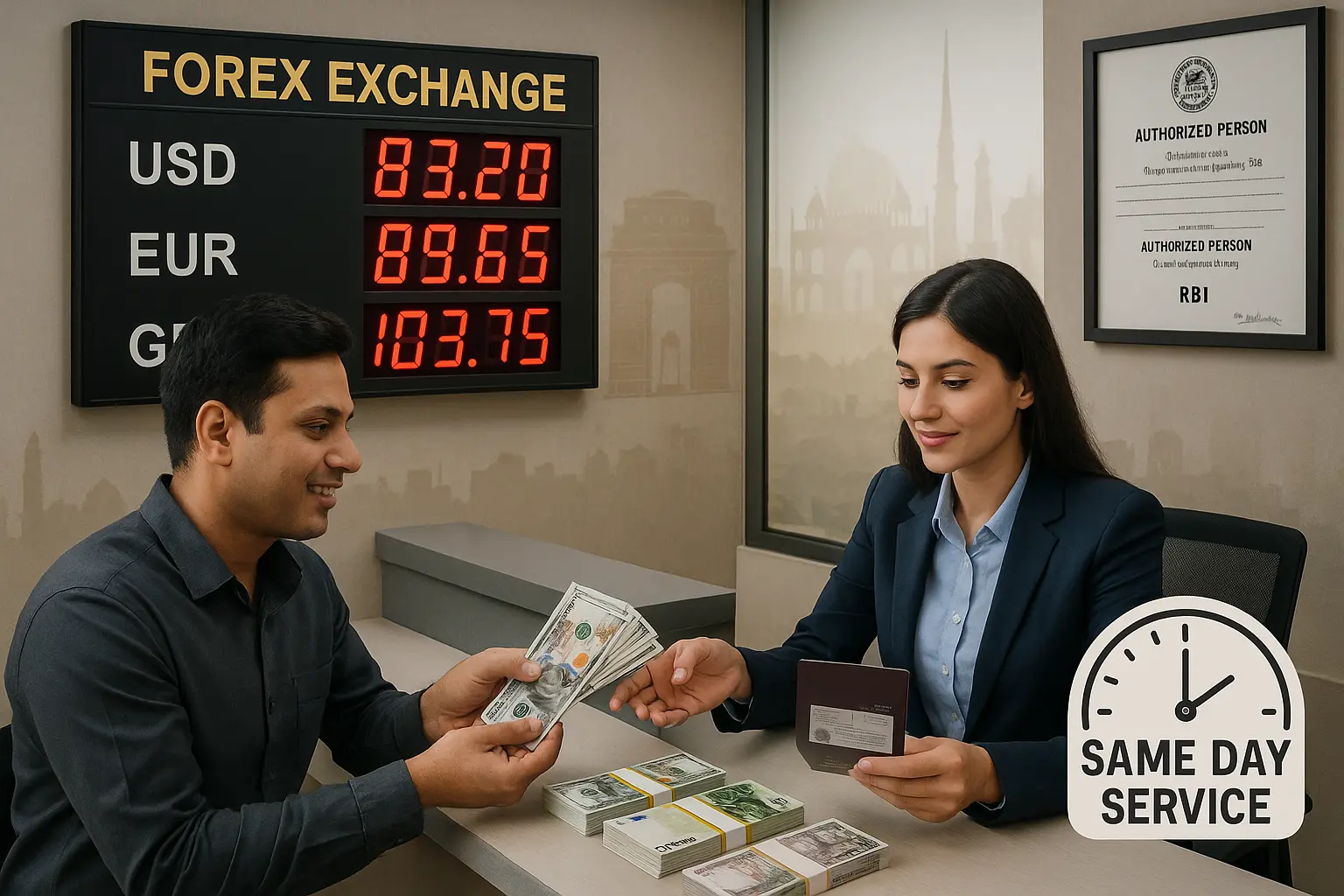
City-based authorized forex providers operate under the same RBI framework but with a different cost structure. They have lower rental overhead, predictable operating hours, and higher competition density.
Because customers can compare multiple providers within the city, pricing remains tighter. Margins shrink. Rates stay competitive.
Many travelers now prefer booking currency online through structured platforms before departure and either collecting it from authorized centers or arranging delivery. This approach removes airport dependency completely.
Established forex providers, including companies like Princess Forex, have built systems that allow customers to lock in rates before reaching the airport. This simple step eliminates urgency-based pricing.
Planning moves the power back to the traveler.
Should You Completely Avoid Delhi Airport Currency Exchange?
Avoid is a strong word.
Airport exchange is legal, safe, and convenient. It serves an important function. But using it as your primary currency source often means paying a premium that could have been avoided.
The smarter strategy is layered planning. Secure the majority of your currency before traveling through authorized providers. Keep airport exchange as a small backup option, not the main transaction.
The difference between smart and expensive forex is rarely about complexity. It is about timing.
A Practical Side-by-Side Cost Breakdown
To understand whether airport exchange is worth it, we need to look at the numbers calmly.
Assume the live market USD to INR rate is around ₹83.00. A competitive city-based authorized forex provider might offer dollars at ₹83.80 or ₹84.20 depending on spread and demand. Now consider an airport counter offering USD at ₹85.50.
The difference may seem small per dollar. But when multiplied, it becomes significant. If you exchange $2,000 at ₹85.50 instead of ₹84.00, you are paying ₹3,000 more. That amount could easily cover airport transfers, a hotel upgrade, or multiple meals abroad.
The key is not whether ₹1 or ₹1.50 per dollar sounds large. The key is that airport exchange embeds the premium inside the rate, making the cost invisible. There is rarely a separate “service charge.” The margin is hidden inside the price board.
Because travelers are focused on departure logistics, very few pause to calculate total difference.
Airport forex is expensive not because it is illegal, but because it is insulated from competition.
Understanding the Spread Mechanism at Airports
Currency exchange operates on spreads — the gap between buying and selling rates. At airports, this spread is usually wider.
Why?
High rental cost, 24/7 staffing, security infrastructure, and limited competition inside terminals all influence pricing. The airport operator charges premium lease costs. Those costs flow down into exchange margins.
Unlike city markets where customers can compare 4–5 authorized providers in a short distance, airport counters operate in a controlled environment. That environment naturally reduces price competition.
When competition reduces, spreads widen.
This is not specific to Delhi Airport alone. It is a global phenomenon observed at major international airports worldwide.
Understanding this helps remove emotional frustration. It is not about being cheated. It is about paying for convenience.
The Hidden Second Loss: Selling Currency Back at the Airport
The airport disadvantage doesn’t end at departure.
Imagine you purchased USD at a higher airport rate. After returning, you decide to sell leftover currency at the airport again for convenience. The airport buying rate is usually lower than city-based buy-back rates.
Now you lose value on both sides — buying high and selling low.
The double spread impact makes airport dependence more expensive over a full travel cycle. Travelers often don’t notice this because transactions are separated by weeks.
Currency exchange should be viewed as a complete loop, not isolated events.
Is Airport Exchange Ever Justified?
Yes — but strategically.
Airport exchange makes sense in limited scenarios. If you need a small emergency amount before boarding, the cost difference is manageable. For $100 or $200, the absolute rupee loss may not materially impact your travel budget.
It also works as a backup safety net. If you miscalculated your needs or faced unexpected schedule changes, airport counters provide immediate access.
The mistake happens when travelers convert their entire travel budget at the airport out of convenience.
Airport exchange should be your Plan B, not Plan A.
How to Avoid Airport Dependency Without Stress
Avoiding airport exchange does not require complicated planning. It requires a shift in timing.
Begin checking live rates 1–2 weeks before departure. Compare authorized providers in Delhi. Lock in your rate through structured platforms or verified counters. Arrange pickup or delivery in advance.
When you reach the airport already holding your currency, departure becomes calmer. There is no last-minute queue, no hurried calculation, no regret about paying premium pricing.
Established authorized providers in Delhi, including firms like Princess Forex, allow customers to view rates beforehand and complete documentation smoothly before travel. This reduces airport reliance completely.
Preparation replaces urgency.
Safety & Authenticity Considerations
Some travelers assume airport exchange guarantees better authenticity. In reality, all RBI-authorized providers must follow identical verification and sourcing protocols.
City-based authorized money changers provide genuine currency notes through regulated supply chains. Authenticity is not exclusive to airport counters.
The real differentiator is pricing, not safety.
As long as you choose an authorized and compliant provider, you receive verified currency and documented transactions.
Final Verdict: Should You Avoid Delhi Airport Currency Exchange?
Avoid is not the right word. Understand it.
Delhi Airport currency exchange is safe, regulated, and convenient. But it operates on urgency pricing. That urgency costs money.
If you plan ahead and secure your currency through authorized city-based providers, you usually save a noticeable amount. If you use airport exchange strategically for small emergency amounts, it serves its purpose.
The real cost breakdown shows one clear truth: airport forex is a premium service. Premium services are not bad — they are just more expensive.
The smartest travelers are not the ones who avoid airports completely. They are the ones who arrive prepared.
Currency planning is not about complexity. It is about timing.
And timing always determines cost.
FAQs
1. Is currency exchange at Delhi Airport safe?
Yes, airport currency exchange counters are authorized and regulated. However, while they are safe, the rates are usually higher compared to city-based authorized money changers.
2. Why are Delhi Airport exchange rates higher?
Airport counters operate with high rental and operational costs. Since travelers often exchange currency urgently, the spread between buying and selling rates is wider.
3. How much more expensive is airport currency exchange?
The difference can range from ₹1 to ₹3 per unit of currency. On larger amounts like $2,000, this can result in paying ₹2,000–₹6,000 extra compared to city rates.
4. Should I exchange all my money at the airport?
It’s better to exchange only a small emergency amount at the airport. Plan and exchange the majority beforehand through authorized forex providers.
5. Can I get better forex rates in Delhi city compared to the airport?
Yes, city-based authorized forex providers usually offer more competitive rates due to higher competition and lower overhead costs.
6. Is it cheaper to exchange currency before reaching Delhi Airport?
In most cases, yes. Booking your foreign currency in advance helps you avoid urgency-based pricing at airport counters.
7. Do airport counters charge extra fees?
They typically do not show separate service charges, but the premium is included in the exchange rate spread.
8. Can I sell leftover foreign currency at Delhi Airport?
Yes, but airport buy-back rates are often lower than city-based authorized providers, leading to another potential loss.
9. Are city-based money changers safe in Delhi?
Yes, if they are RBI-authorized and compliant. Established providers like Princess Forex operate within regulatory guidelines and offer transparent pricing.
10. What is the smartest strategy for currency exchange before travel?
Track live rates 1–2 weeks before departure, compare authorized providers, secure most of your currency in advance, and use airport exchange only as backup.