

Introduction
Foreign exchange plays a crucial role in India’s economy, especially with increasing international travel, global education, business transactions, and cross-border investments. Every time someone buys foreign currency, sends money abroad, or receives funds from another country, it becomes part of a regulated financial system.
At the center of this system is the Reserve Bank of India (RBI), which ensures that all foreign exchange transactions in India are conducted in a safe, transparent, and legally compliant manner.
For most people, forex transactions feel like a simple process—checking rates, exchanging currency, and completing the transaction. However, behind this simplicity lies a structured regulatory framework designed to maintain financial stability and prevent misuse.
Understanding how RBI regulates forex transactions helps individuals make informed decisions, stay compliant with rules, and avoid unnecessary complications.
In this guide, we will explore how RBI manages foreign exchange in India, the rules involved, and what it means for travelers, students, and NRIs.
What Is Forex Regulation and Why It Matters
Forex regulation refers to the set of rules and guidelines that govern how foreign currency is bought, sold, and transferred within a country.
In India, forex regulation is essential for maintaining economic balance, controlling capital flow, and preventing illegal financial activities such as money laundering or unauthorized transfers.
Without proper regulation, there would be a risk of uncontrolled currency movement, which could impact the country’s financial stability.
The RBI plays a key role in ensuring that foreign exchange transactions are conducted through authorized channels and within defined limits.
For individuals, this means that every forex transaction—whether small or large—follows a structured and secure process.
The Role of RBI in Forex Transactions
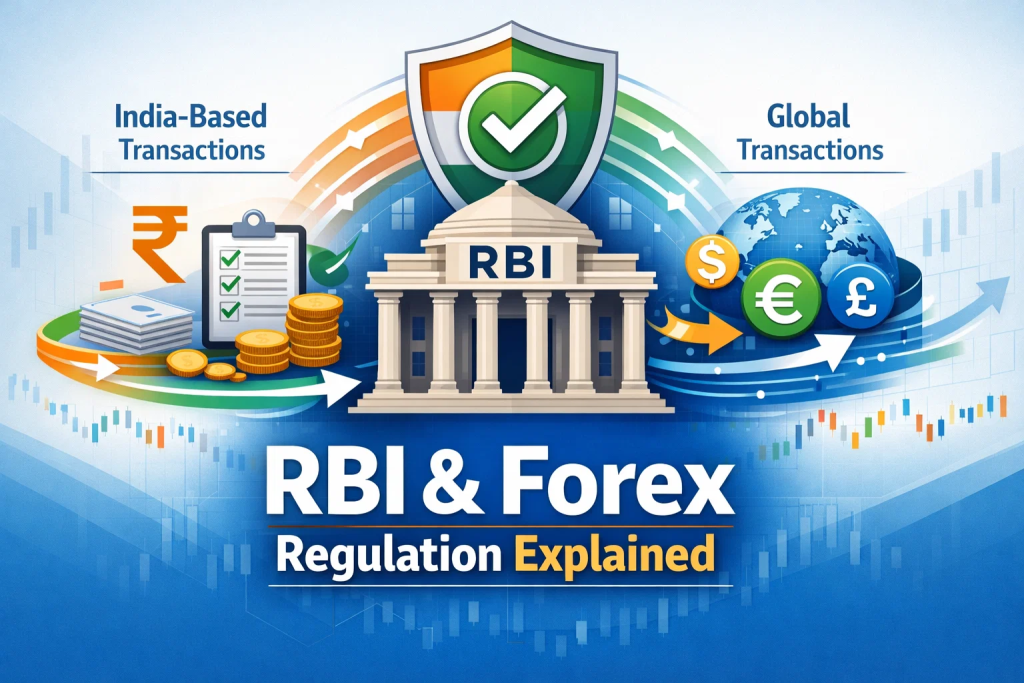
The Reserve Bank of India acts as the central authority responsible for regulating all foreign exchange activities in the country.
It does not directly handle individual transactions but sets the rules that banks, financial institutions, and authorized forex providers must follow.
The RBI ensures that:
- Foreign exchange transactions are legally compliant
- Currency flow in and out of the country is monitored
- Financial risks are minimized
- Transparency is maintained across all forex activities
It also provides guidelines on how much foreign currency individuals can carry, how funds can be transferred abroad, and what documentation is required.
This structured approach creates a safe environment for both customers and service providers.
FEMA: The Backbone of Forex Regulation in India
One of the most important aspects of forex regulation in India is the Foreign Exchange Management Act (FEMA).
FEMA is the primary law that governs foreign exchange transactions in the country. It was introduced to simplify and modernize forex regulations, replacing older laws that were more restrictive.
The objective of FEMA is to facilitate external trade and payments while maintaining proper control over foreign exchange.
Under FEMA, all forex transactions are categorized into:
- Current Account Transactions (such as travel, education, medical expenses)
- Capital Account Transactions (such as investments and asset transfers)
Each category has specific rules and limits defined by the RBI.
For individuals, most day-to-day forex needs fall under current account transactions, which are relatively simpler and more flexible.
Authorized Dealers: Who Can Provide Forex Services
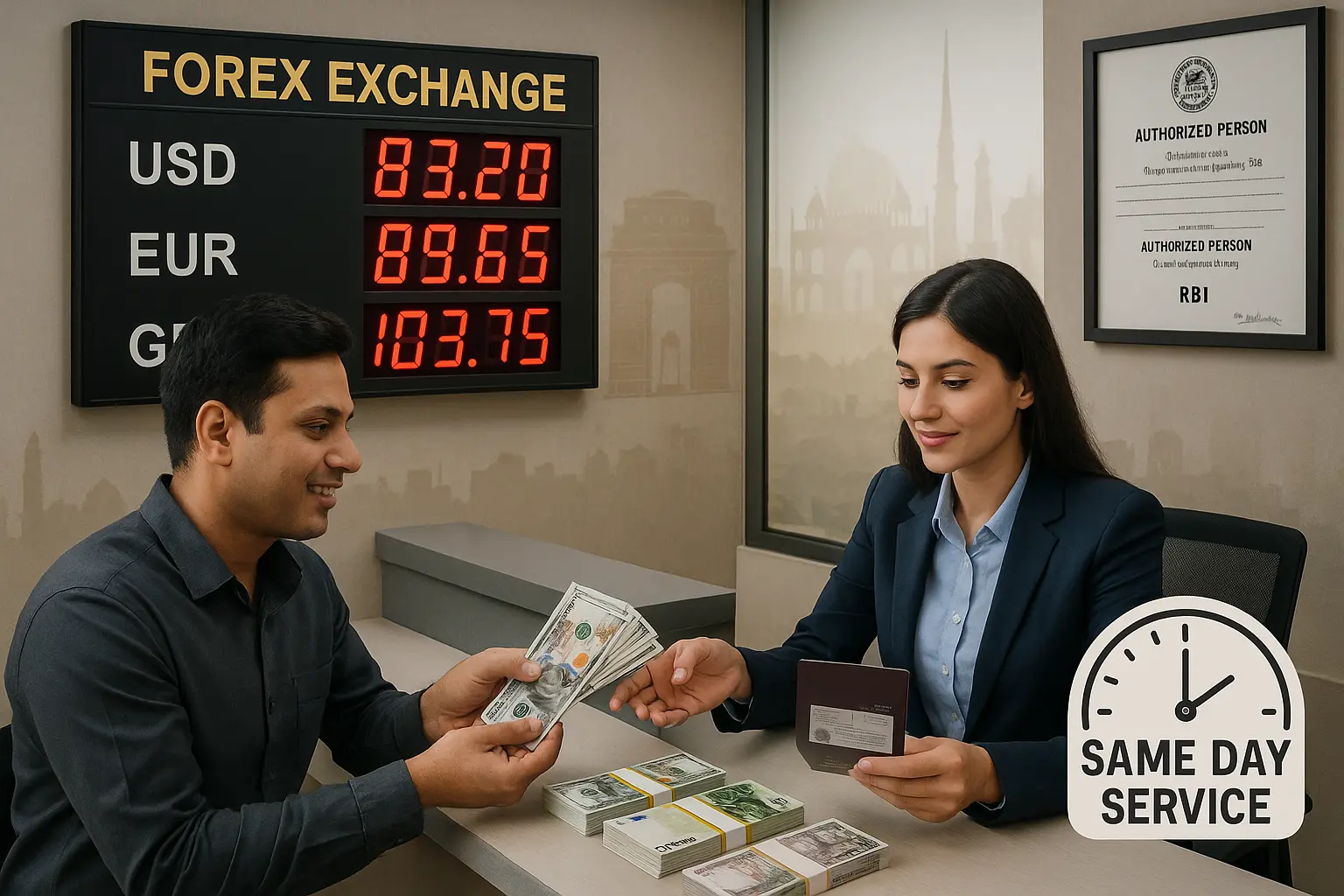
RBI does not allow just anyone to deal in foreign exchange. Only authorized entities are permitted to provide forex services.
These include:
- Banks
- Licensed money changers
- Authorized forex companies
These entities are known as Authorized Dealers (ADs), and they operate under RBI guidelines.
Choosing an authorized provider is important because it ensures that your transaction is secure, transparent, and compliant with regulations.
Working with trusted providers such as Princess Forex and other RBI-authorized entities helps ensure that your forex needs are handled safely and efficiently.
How RBI Controls Currency Exchange Limits
One of the key ways RBI regulates forex transactions is by setting limits on how much foreign currency individuals can buy or transfer.
This is done through the Liberalised Remittance Scheme (LRS), which allows Indian residents to remit a certain amount of money abroad each financial year.
Currently, individuals can remit up to a specified limit under LRS for purposes like travel, education, and investments.
These limits help ensure that currency flow remains controlled and aligned with the country’s economic policies.
For travelers, this means there are defined limits on how much foreign currency they can carry or exchange for a trip.
Documentation and Compliance in Forex Transactions
One of the most important aspects of RBI regulation is documentation and compliance. Every foreign exchange transaction in India must be supported by proper documentation to ensure that the purpose of the transaction is legitimate.
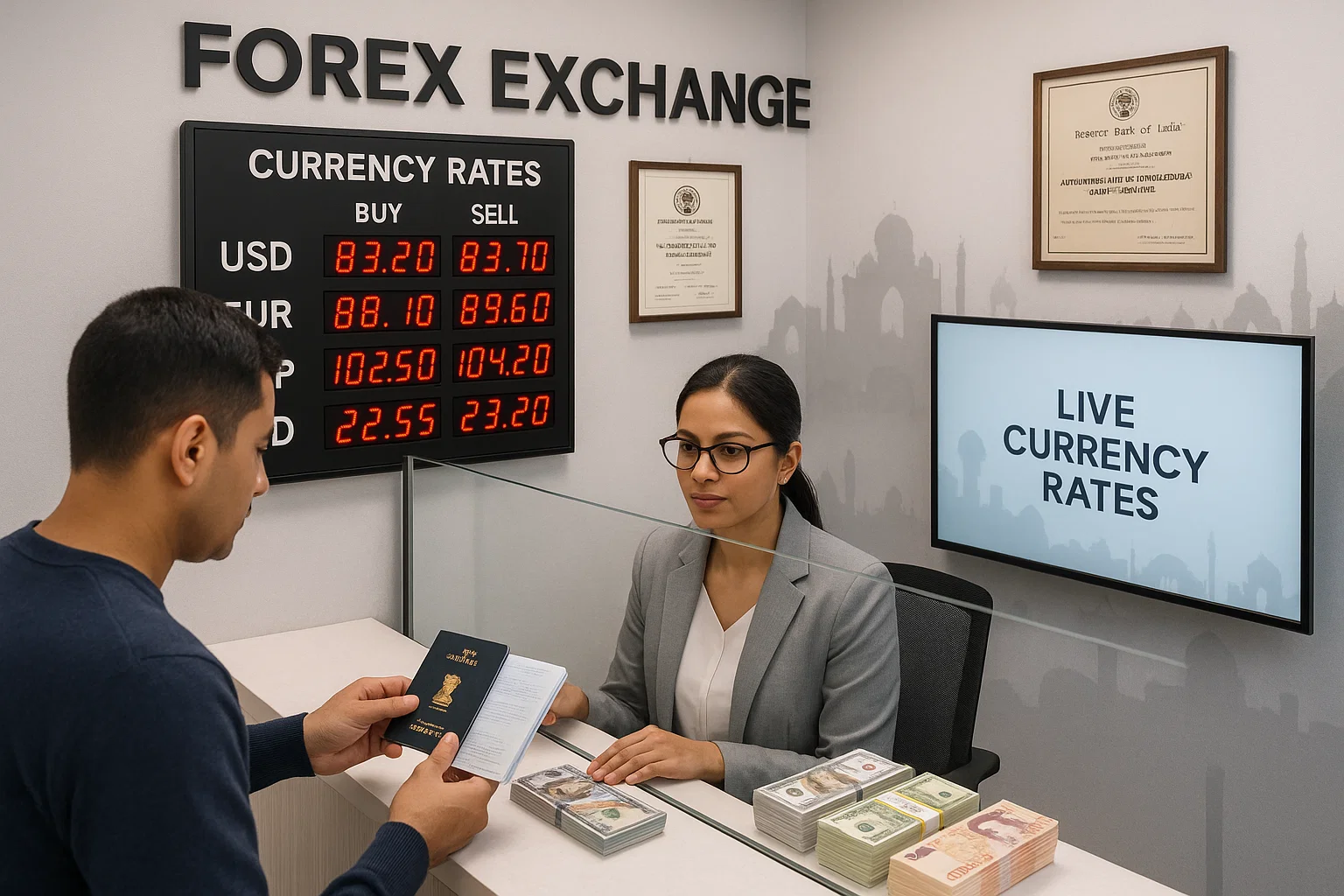
When you buy foreign currency or send money abroad, you are usually required to provide documents such as your passport, travel ticket, visa (if applicable), and PAN card. These documents help verify your identity and the purpose of the transaction.
For example, if you are traveling abroad, your currency exchange must be linked to your travel plans. Similarly, if you are sending money for education, supporting documents like admission letters may be required.
This structured documentation process ensures that foreign exchange is used only for valid purposes and helps prevent misuse.
While it may feel like an extra step, this system is designed to make forex transactions safer and more transparent for everyone.
How RBI Ensures Transparency in Forex Transactions
Transparency is a key focus of RBI’s regulatory framework.
Forex providers are required to clearly disclose the exchange rate, margin, and applicable charges to customers. This helps individuals understand the total cost of their transaction instead of relying only on the visible rate.
RBI also ensures that authorized dealers follow fair practices and maintain proper records of all transactions.
This level of transparency allows customers to compare providers and make informed decisions.
It also builds trust in the system, as customers know that their transactions are being conducted within a regulated and monitored environment.
Monitoring and Reporting of Forex Activities
RBI continuously monitors forex transactions through a structured reporting system.
Authorized dealers are required to maintain detailed records of all transactions and report them to the RBI when necessary. This helps the central bank track the flow of foreign currency in and out of the country.
Large or unusual transactions may be subject to additional scrutiny to ensure compliance with regulations.
This monitoring system plays an important role in preventing illegal activities such as money laundering and unauthorized fund transfers.
For individuals, this means that every forex transaction is part of a larger, well-monitored financial system.
Role of PAN and KYC in Forex Regulation
Another key element of RBI regulation is the use of KYC (Know Your Customer) and PAN verification.
Before processing forex transactions, authorized providers are required to verify the customer’s identity. This includes collecting basic details and validating them through official documents.
PAN is often required for transactions above certain limits, helping track financial activities and ensure tax compliance.
KYC norms help create accountability and reduce the risk of fraudulent transactions.
For customers, this means that while the process may involve a few steps, it ultimately ensures a safer and more secure experience.
How RBI Regulates Different Types of Forex Transactions
RBI regulations vary depending on the type of forex transaction.
For travel-related transactions, there are limits on how much foreign currency you can carry. These limits are designed to ensure that individuals have sufficient funds without allowing excessive outflow.
For education and medical expenses, higher limits are usually allowed, as these involve essential needs.
For business and investment-related transactions, additional guidelines apply to ensure proper financial control.
This structured approach ensures that each type of transaction is handled appropriately based on its purpose.
Real-Life Impact of RBI Rules on Travelers and NRIs
While RBI regulations may seem technical, they have a direct impact on everyday users.
For travelers, these rules ensure that currency exchange is safe, structured, and predictable. It also means that you need to plan your forex in advance and keep required documents ready.
For NRIs, RBI regulations provide a framework for managing funds between India and other countries. This includes rules for repatriation, account management, and international transfers.
For students and professionals, these regulations ensure that funds can be transferred abroad securely for education or work-related needs.
Overall, RBI rules create a balance between ease of access and financial control, benefiting both individuals and the economy.
Common Misconceptions About RBI Forex Regulations
Even though forex transactions are quite common today, there are still many misconceptions around how RBI regulations actually work.
One of the most common myths is that buying foreign currency is a completely unrestricted process. In reality, every transaction is governed by rules, limits, and documentation requirements.
Another misconception is that exchange rates are controlled by RBI. While RBI regulates the system, the actual rates are influenced by global markets and provider margins.
Some people also believe that anyone can provide forex services, but only authorized dealers approved by RBI are allowed to legally offer currency exchange.
There is also confusion around limits, with many assuming they can exchange unlimited amounts of currency without restrictions. However, schemes like LRS clearly define these limits.
Understanding these misconceptions helps individuals approach forex transactions with more clarity and confidence.
Common Mistakes People Make in Forex Transactions
While RBI has created a structured system, many people still make mistakes that can lead to inconvenience or additional costs.
One of the most frequent mistakes is not checking whether the provider is authorized. This can expose individuals to risks and non-compliant transactions.
Another common issue is ignoring documentation requirements. Missing or incorrect documents can delay the transaction or lead to rejection.
Some travelers also tend to leave the forex exchange until the last moment, which reduces their options and may result in higher costs.
There is also a tendency to focus only on the exchange rate while ignoring other components like margin and charges.
In some cases, people exceed limits unknowingly due to lack of awareness about RBI guidelines.
Avoiding these mistakes can make the forex experience smoother and more efficient.
Practical Tips to Stay Compliant and Hassle-Free
To ensure that your forex transactions are smooth and aligned with RBI regulations, a few simple practices can make a big difference.
Start by always choosing an authorized forex provider. This ensures that your transaction is secure and compliant with all regulations.
Keep your documents ready and updated. Having everything in place helps speed up the process and avoids last-minute issues.
Plan your forex requirements in advance instead of rushing into it. This gives you better control over rates and options.
It is also helpful to understand the purpose of your transaction and ensure that it falls within the allowed categories under FEMA.
Keeping track of your transactions, especially if you are making multiple transfers, helps you stay within the permitted limits.
Being informed and prepared is the best way to avoid complications.
How RBI Regulations Build Trust in the Forex System
One of the biggest advantages of RBI regulation is the level of trust and reliability it brings to the system.
Customers can feel confident knowing that their transactions are being handled within a structured and monitored framework.
This trust is especially important in financial transactions involving foreign currency, where risks can be higher without proper regulation.
Authorized providers, including platforms like Princess Forex, operate within this regulated environment, ensuring that customers receive transparent and compliant services.
This system benefits not only individuals but also the overall economy by maintaining stability and control over foreign exchange.
Conclusion
Understanding how RBI regulates forex transactions in India gives you a clear advantage when dealing with foreign currency. What may seem like a simple exchange process is actually part of a well-structured system designed to ensure safety, transparency, and financial stability.
From frameworks like FEMA to systems such as the Liberalised Remittance Scheme (LRS), RBI has created guidelines that balance accessibility with control. These regulations not only protect the economy but also safeguard individuals from risks associated with unregulated transactions.
For travelers, students, NRIs, and businesses, this means that every forex transaction follows a reliable process backed by proper documentation and compliance checks.
The key takeaway is simple — when you understand the system, you can navigate it more efficiently. Choosing authorized providers, planning your forex in advance, and staying aware of limits and rules can make your experience smooth and hassle-free.
Forex is not just about rates — it’s about making informed decisions within a regulated and secure environment.
FAQs
1. Who regulates forex transactions in India?
Forex transactions in India are regulated by the Reserve Bank of India (RBI).
2. What is FEMA in forex regulation?
FEMA (Foreign Exchange Management Act) is the primary law governing foreign exchange transactions in India.
3. Can anyone provide foreign exchange services?
No, only RBI-authorized dealers like banks and licensed forex providers can offer forex services.
4. What is the LRS limit for forex transactions?
Under the Liberalised Remittance Scheme, individuals can remit up to a specified limit per financial year.
5. Are documents required for currency exchange?
Yes, documents like passport, travel ticket, and PAN are usually required.
6. Does RBI decide forex exchange rates?
No, exchange rates are influenced by global markets, while RBI regulates the system.
7. What happens if I exceed forex limits?
Exceeding limits may lead to compliance issues or rejection of the transaction.
8. Is KYC mandatory for forex transactions?
Yes, KYC verification is required to ensure identity and compliance.
9. Can I exchange currency without a valid purpose?
No, forex transactions must be linked to a valid purpose such as travel, education, or business.
10. Why should I use authorized forex providers?
Authorized providers ensure safe, transparent, and RBI-compliant transactions.