


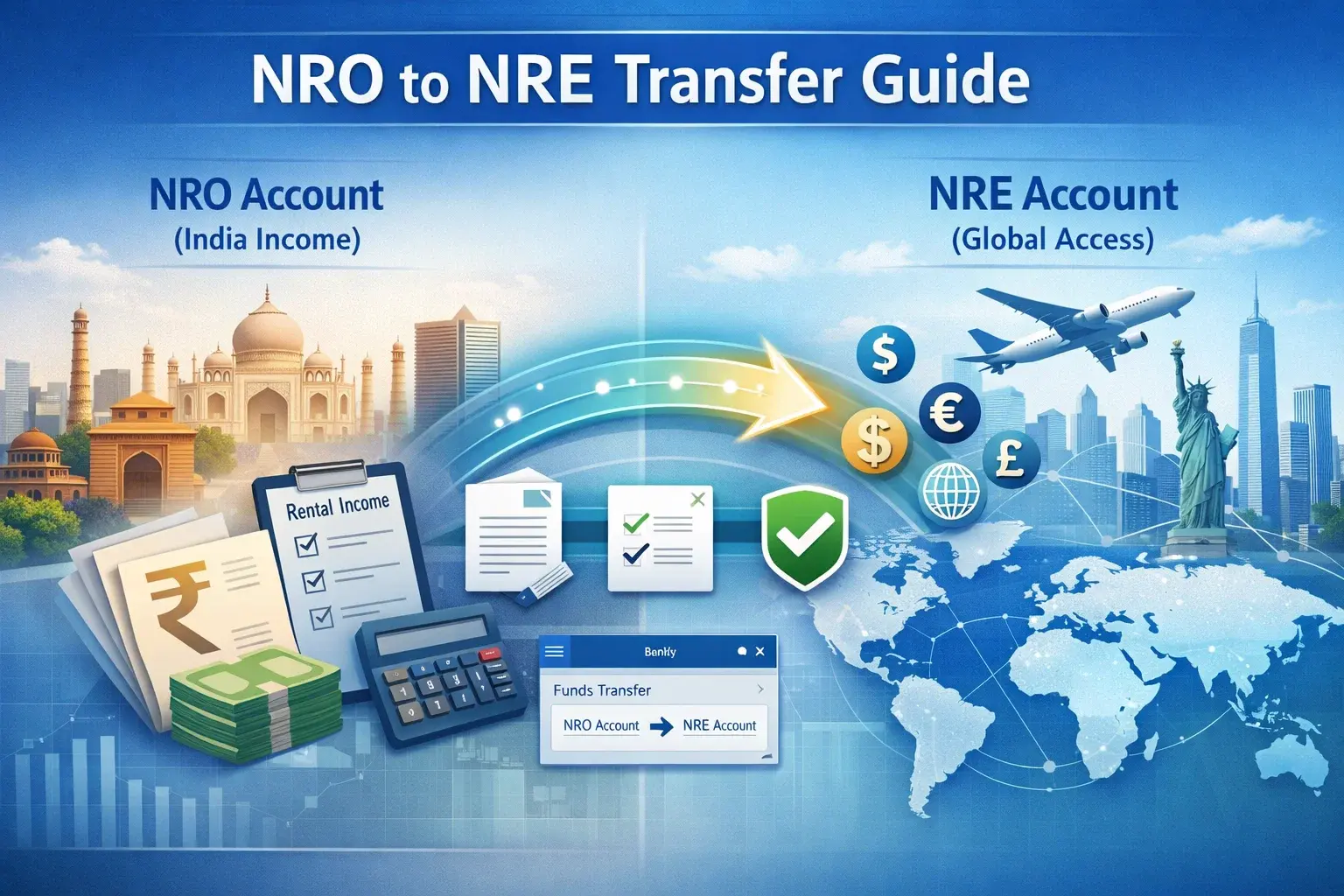
Introduction
Managing finances across countries can feel complicated, especially for Non-Resident Indians (NRIs) who maintain multiple bank accounts in India. Among the most commonly used accounts are NRO (Non-Resident Ordinary) and NRE (Non-Resident External) accounts. While both serve different purposes, many NRIs often find themselves needing to transfer funds from an NRO account to an NRE account.
At first glance, this process may seem technical or confusing, but it is actually quite structured and manageable once you understand the rules and requirements involved. Whether the funds come from rental income, dividends, or other sources in India, transferring them to an NRE account allows easier repatriation and global access.
However, this type of transfer is governed by certain regulations set by the Reserve Bank of India (RBI), including limits, documentation, and tax compliance. Understanding these aspects is important to ensure a smooth and compliant transfer process.
In this guide, we’ll walk you through everything you need to know about transferring money from an NRO to an NRE account, including the process, eligibility, documentation, and important considerations.
Understanding NRO and NRE Accounts
Before diving into the transfer process, it’s important to clearly understand the difference between NRO and NRE accounts, as this forms the foundation of how the transfer works.
An NRO account is primarily used to manage income earned in India. This can include rental income, pension, dividends, or any other earnings generated within the country. The funds in an NRO account are held in Indian Rupees and are subject to applicable taxes.
On the other hand, an NRE account is used to hold foreign income that is transferred to India. The funds in this account are fully repatriable, meaning they can be freely transferred abroad without restrictions. Additionally, the interest earned on NRE accounts is generally tax-free in India.
Because of these differences, many NRIs prefer to move their funds from an NRO account to an NRE account, especially when they want to repatriate money abroad or manage their finances more efficiently.
Why Transfer Money From NRO to NRE Account?
There are several practical reasons why NRIs choose to transfer funds from their NRO account to their NRE account.
One of the main reasons is ease of repatriation. While NRO accounts have restrictions on transferring money abroad, NRE accounts allow free repatriation. By moving funds into an NRE account, NRIs gain better flexibility in accessing and transferring their money globally.
Another important reason is tax efficiency. Funds in an NRO account are taxable in India, whereas interest earned in an NRE account is generally exempt from tax. This makes NRE accounts more attractive for holding funds long-term.
Additionally, having funds in an NRE account simplifies financial management for NRIs who frequently move money between India and their country of residence.
Is It Allowed to Transfer Money From NRO to NRE Account?
Yes, transferring money from an NRO account to an NRE account is allowed, but it is subject to specific rules and limits defined by the Reserve Bank of India.
Under current regulations, NRIs are allowed to transfer up to USD 1 million per financial year from their NRO account to their NRE account or overseas. This limit includes all repatriation transactions combined.
The transfer is permitted only after ensuring that all applicable taxes on the funds have been paid. This is an important requirement, as the funds being transferred must be compliant with Indian tax regulations.
Banks usually require proper documentation to verify the source of funds and confirm that tax obligations have been fulfilled before processing the transfer.
Step-by-Step Process to Transfer Money From NRO to NRE Account
The process of transferring money from an NRO account to an NRE account involves a few structured steps. While the exact procedure may vary slightly depending on the bank, the overall flow remains similar.
Step 1: Ensure Eligibility of Funds
The first step is to ensure that the funds in your NRO account are eligible for transfer. This means the money should come from legitimate sources such as income earned in India, and all taxes on the funds should be cleared.
Banks may ask for proof of income or supporting documents to verify the source of funds before approving the transfer.
Step 2: Submit Required Forms
To initiate the transfer, you will need to submit specific forms as required by your bank. One of the most important forms is Form 15CA and Form 15CB, which are related to tax compliance.
Form 15CA is a declaration made by the account holder, while Form 15CB is a certificate issued by a Chartered Accountant confirming that applicable taxes have been paid.
These forms are essential for ensuring that the transfer complies with tax regulations.
Step 3: Request Transfer Through Bank
Once the documentation is ready, you can submit a transfer request to your bank. This can often be done through online banking, email, or by visiting the bank branch.
The bank will review your request, verify the documents, and process the transfer accordingly.
Step 4: Transfer Processing and Credit
After verification, the funds are transferred from the NRO account to the NRE account. The processing time may vary depending on the bank and the completeness of documentation.
Once processed, the amount will be credited to your NRE account, from where it can be used or transferred abroad freely.
Key Documents Required for NRO to NRE Transfer
When transferring money from an NRO account to an NRE account, documentation plays a crucial role in ensuring compliance.
Typically, the following documents are required:
- Form 15CA
- Form 15CB (certified by a Chartered Accountant)
- Proof of source of funds
- Bank request form
- PAN card details
These documents help banks verify that the funds are legitimate and that all tax obligations have been fulfilled.
Taxes and Charges Involved in NRO to NRE Transfer
One of the most important aspects of transferring money from an NRO account to an NRE account is understanding the tax implications.
Funds held in an NRO account are generally taxable in India, which means that before transferring the money, all applicable taxes must be paid. This includes income tax on earnings such as rent, interest, or dividends.
Once taxes are cleared and certified through Form 15CB, the funds become eligible for transfer. Without proper tax compliance, the bank will not process the transaction.
In addition to taxes, banks may also charge a service fee or processing charge for handling the transfer. These charges vary depending on the bank and the amount being transferred.
In some cases, there may also be currency conversion charges if the funds are eventually repatriated abroad.
Understanding these costs in advance helps you plan your transfer more effectively and avoid surprises.
Common Mistakes to Avoid During the Transfer
While the process of transferring funds from an NRO to an NRE account is structured, many people make avoidable mistakes that can delay the transaction.
One common mistake is not clearing tax liabilities before initiating the transfer. Without proper tax documentation, the transfer request may be rejected or delayed.
Another issue is incomplete or incorrect documentation. Missing forms like 15CA or 15CB can slow down the process significantly.
Some NRIs also underestimate the time required for processing. Since banks need to verify documents carefully, it’s important to plan the transfer in advance rather than leaving it for the last moment.
There is also a tendency to overlook the annual transfer limit of USD 1 million, which includes all repatriation transactions. Keeping track of this limit is essential to avoid exceeding regulatory boundaries.
Avoiding these common mistakes ensures a smoother and faster transfer experience.
Tips for a Smooth NRO to NRE Transfer
To make the transfer process more efficient and hassle-free, a few practical tips can be helpful.
Start by organizing all your financial records and ensuring that your income sources are well documented. This makes it easier for your Chartered Accountant to certify the required forms.
Working with a qualified professional for tax compliance can also simplify the process, especially when dealing with Form 15CB.
It’s also a good idea to communicate with your bank in advance to understand their specific requirements, as procedures may vary slightly between institutions.
Planning your transfer timing can also make a difference. Avoid peak financial periods when processing times may be longer due to increased workload.
Taking a proactive approach can save time and reduce unnecessary complications.
Role of Forex and Financial Service Providers
While banks handle the actual transfer between NRO and NRE accounts, forex and financial service providers can play a supportive role, especially when it comes to managing funds internationally.
For NRIs who frequently move money between countries, having access to reliable forex services can help in planning repatriation and currency conversion more efficiently.
Providers like Princess Forex and similar platforms assist customers in understanding currency movement, conversion timing, and managing international financial transactions smoothly.
While they may not directly process NRO to NRE transfers, they can be valuable partners in managing the broader financial aspects associated with global fund movement.
When Should You Consider Transferring Funds?
Timing your transfer can be an important decision.
If you plan to repatriate funds abroad or need to use money internationally, transferring from NRO to NRE becomes essential.
It is also useful when you want to consolidate your funds into an account that offers better flexibility and tax advantages.
However, if you do not have immediate plans to use the funds outside India, you may choose to delay the transfer and manage the funds within your NRO account.
Evaluating your financial goals and future plans can help you decide the right time for the transfer.
Conclusion
Transferring money from an NRO account to an NRE account is a common requirement for many NRIs managing finances across borders. While the process involves specific rules, documentation, and tax compliance, it is quite manageable with proper understanding and preparation.
By ensuring that your funds are tax-compliant, keeping documentation ready, and following the correct procedures, you can complete the transfer smoothly and efficiently.
The key is to stay informed, plan ahead, and avoid common mistakes that can delay the process. With the right approach, you can make the most of your funds and enjoy greater flexibility in managing your international finances.
Understanding how NRO to NRE transfers work empowers you to take better control of your financial decisions and simplifies cross-border money management.
FAQs
1. Can I transfer money from an NRO account to an NRE account freely?
Yes, you can transfer funds from your NRO (Non-Resident Ordinary) account to your NRE (Non-Resident External) account. However, the transfer is governed by RBI regulations and is subject to a maximum limit of USD 1 million per financial year (April–March). You must also comply with tax and documentation requirements before initiating the transfer.
2. Is tax applicable on transfers from NRO to NRE account?
Yes, funds in an NRO account are typically taxable in India. Before transferring money to an NRE account, all applicable taxes (such as on interest, rent, or other income) must be paid. Banks require proof of tax compliance before processing the transfer.
3. What is the maximum limit for such transfers?
You can remit or transfer up to USD 1 million (or its equivalent in other currencies) per financial year from your NRO account to your NRE account or abroad. This limit includes all remittances made under this category during the year.
4. What documents or forms are required for the transfer?
To ensure tax compliance, you need to submit:
- Form 15CA – A declaration of remittance made by the account holder
- Form 15CB – A certificate issued by a Chartered Accountant confirming that applicable taxes have been paid
Some banks may also request additional documents such as proof of source of funds or account statements.
5. How long does the transfer process take?
The transfer process generally takes between 2 to 5 working days. The timeline depends on how quickly documents are submitted and verified, as well as the bank’s internal processing procedures.
6. Can I transfer funds online?
Many banks offer the option to initiate transfer requests online through internet banking. However, you may still need to upload or submit supporting documents (like Forms 15CA/15CB), and the bank will process the transfer only after verification.
7. Is the interest earned in an NRE account taxable?
No, interest earned on funds in an NRE account is exempt from tax in India, provided you qualify as a Non-Resident Indian (NRI) under applicable regulations.
8. Can I transfer rental income from my NRO account to my NRE account?
Yes, rental income credited to your NRO account can be transferred to your NRE account. However, you must first pay applicable taxes on the rental income and provide the necessary documentation to the bank.
9. Are there any bank charges for this transfer?
Yes, banks usually levy service charges or processing fees for transferring funds from an NRO to an NRE account. The charges vary depending on the bank and the amount being transferred.
10. Can I transfer money directly abroad from an NRO account?
Yes, you can remit funds directly from your NRO account to an overseas account, subject to the same USD 1 million annual limit and compliance with tax and documentation requirements